


Research News
Essential Role of Extracellular Sulfatase Sulf1 in Reward and Aversion Learning
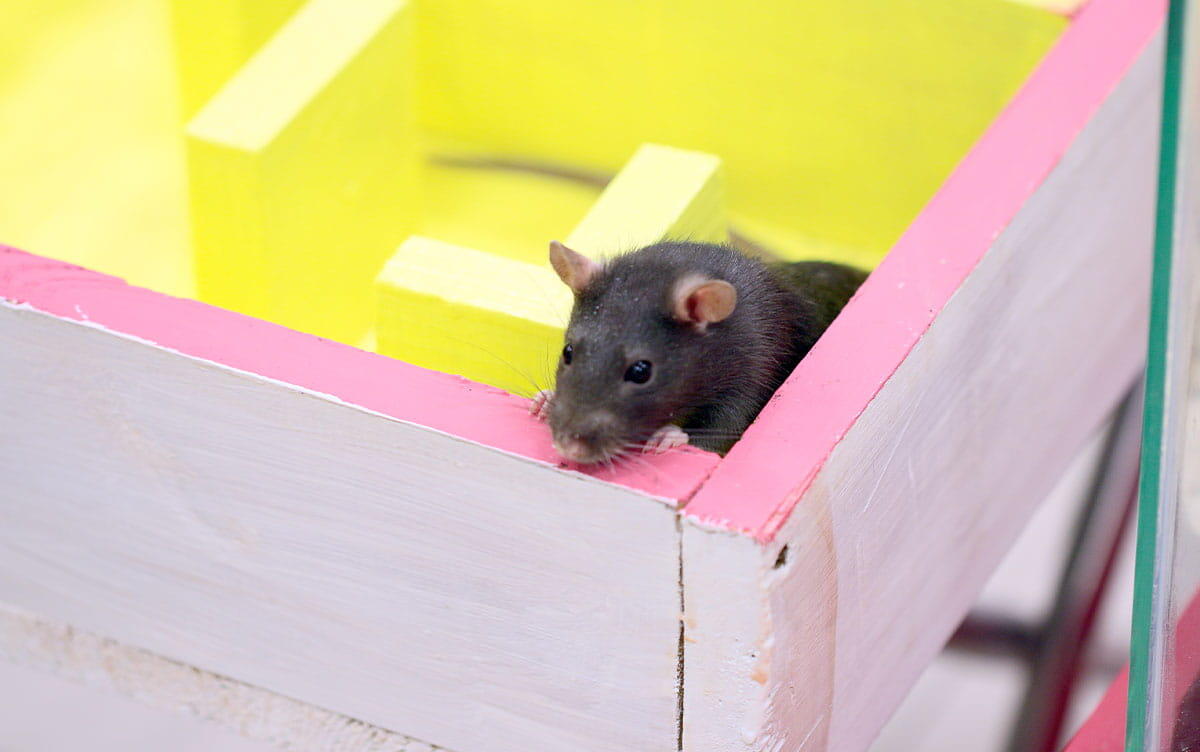 Image by Yta23/Shutterstock
Researchers at University of Tsukuba and their collaborators have demonstrated that learning from both rewarding and aversive outcomes requires a common brain molecule, Sulfatase 1 (Sulf1). This extracellular enzyme removes 6-O-sulfate groups from heparan sulfate, a sugar chain involved in regulating various physiological functions. The study also revealed that Sulf1 modulates dopaminergic neural circuits essential for these learning processes. Behavioral experiments in mice confirmed that Sulf1 plays a crucial role in regulating these circuits.
Tsukuba, Japan—Behaviors are reinforced by associating an action with either a favorable outcome (reward-dependent learning) or an unfavorable outcome (aversion learning), and both forms of learning require activity in a small brain region below the cortex called the nucleus accumbens, a component of a complex neural network termed the basal ganglia. Experiments reported by researchers at University of Tsukuba and their collaborators at the University of Osaka demonstrate that extracellular enzymes termed sulfatases, which regulate development and are implicated in cancer but have largely unknown functions in the adult brain, are required for both reward-dependent and aversion learning in adult mice.
The research team previously reported that Sulfatase 1 (Sulf1) is highly expressed in the adult mouse brain, particularly in the nucleus accumbens and prefrontal cortex. In their recent study, mice missing the Sulf1 gene (knockout mice) demonstrated significant impairments in both reward and aversion learning. Furthermore, knockout of Sulf1 specifically in neurons expressing dopamine D1 receptors impaired reward-based learning only, whereas deletion in neurons expressing dopamine D2 receptors impaired aversion learning. These findings indicate that Sulf1 is essential for both reward and aversion learning, acting through distinct dopaminergic pathways, and highlight its critical role in adult brain function beyond development.
###
This work was supported by JSPS KAKENHI Grants (JP21K15210 to T.M.; JP23K24205, JP23K18163, and JP25K02547 to T.H.; JP20300108 and JP25293065 to M.M.), AMED Grants (JP25wm0625322 and JP21gm1510006 to T.H.), and grants from Takeda Science Foundation (to T.H. and M.M.), Naito Foundation (to M.M.), SENSHIN Medical Research Foundation (to M.M.), and the Collaborative Research Program of Institute for Protein Research, the University of Osaka (CRa-20-03 to T.H.).
Original Paper
- Title of original paper:
- Essential roles of heparan sulfate endosulfatase Sulf1 in reward and aversion learning through distinct dopamine D1 and D2 receptor pathways in male mice
- Journal:
- Journal of Neurochemistry
- DOI:
- 10.1111/jnc.70338
Correspondence
Professor MASU Masayuki
Institute of Medicine, University of Tsukuba
Professor HIKIDA Takatoshi
Laboratory for Advanced Brain Functions, Institute for Protein Research, the University of Osaka
Related Link
