


Research News
High‑Performance All‑Solid‑State Magnesium-Air Rechargeable Battery Enabled by Metal-Free Nanoporous Graphene
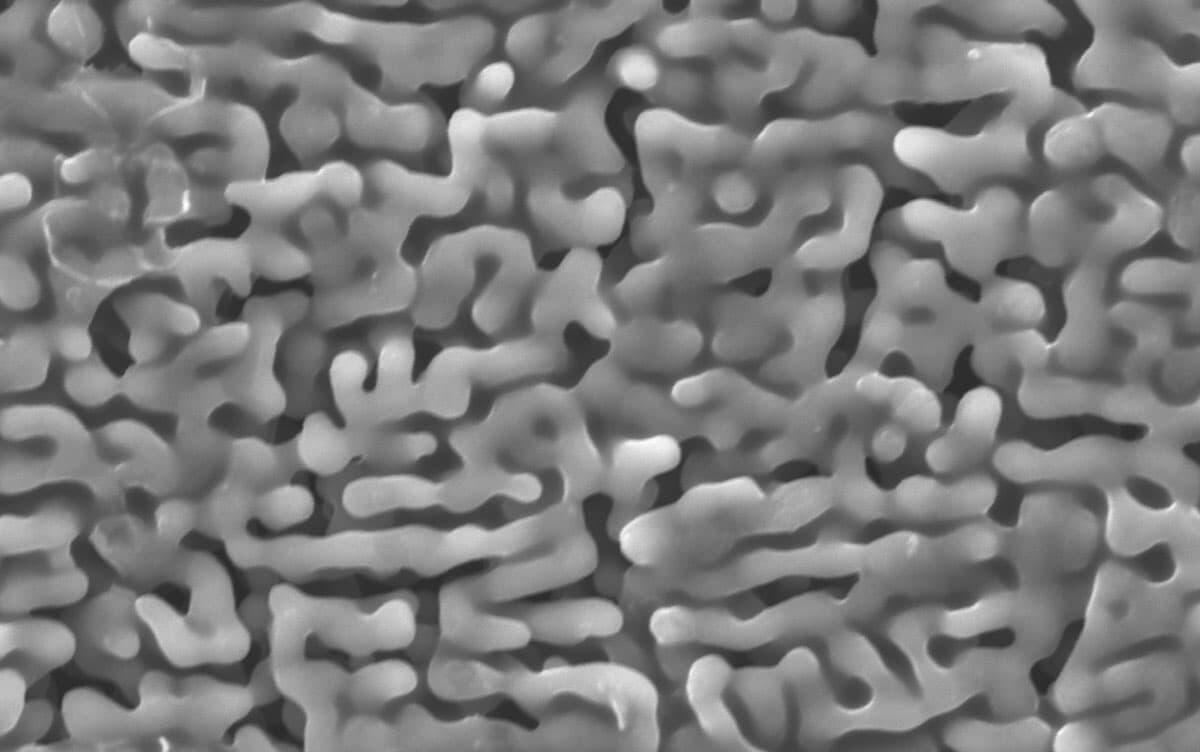 Provided by Yoshikazu Ito
Researchers at University of Tsukuba have developed a high-performance, reusable, all-solid-state magnesium-air rechargeable battery that prevents electrolyte leakage and exhibits remarkable resistance to chloride-induced degradation. The battery was realized by combining an inexpensive, readily available magnesium-metal anode, a porous nitrogen-doped graphene cathode, and a solidified magnesium chloride-containing electrolyte, and it demonstrates excellent performance over repeated cycles.
Tsukuba, Japan—Large-capacity rechargeable batteries capable of sustaining repeated charge-discharge cycles are expected to become core technologies for electric vehicles and other elements of an electrified society. However, current systems often rely on costly metals such as lithium and platinum, creating an urgent demand for more cost-effective alternative materials.
Magnesium-air rechargeable batteries, which consist of a carbon-based cathode, a magnesium-metal anode, and a magnesium chloride-containing electrolyte, utilize atmospheric oxygen as the active material at the cathode. This design enables the construction of high‑capacity batteries at low cost. Although the theoretical performance of magnesium-air batteries is almost identical to that of lithium-air batteries, the presence of chloride ions can induce internal chlorination, leading to degradation and reduced performance.
This study introduces a nitrogen-doped porous graphene cathode with strong resistance to chloride attack. The research team fabricated an all‑solid‑state magnesium-air rechargeable battery using commercially available magnesium metal as the anode and a polymer gel infused with magnesium chloride as the solid electrolyte. The resulting battery exhibited performance superior to that of systems employing platinum‑based cathodes. This superior performance was attributed to the excellent chloride resistance, high catalytic activity, and porous architecture of the graphene cathode, which efficiently accommodates discharge products and enhances mass transport. Furthermore, solidifying the electrolyte substantially improved safety and mechanical flexibility in comparison to batteries using liquid electrolyte. Even when bent to 120°, the battery retained its initial performance with no evidence of electrolyte leakage.
The proposed design has the potential to expand the applications of rechargeable batteries, mitigate material supply risks, and serve as a promising alternative to lithium‑based rechargeable battery systems.
###
This work was funded by SUZUKI FONDATION; JSPS-Kakenhi (JP24H00478) the Open Facility, Research Facility Center for Science and Technology, University of Tsukuba; and a cooperative program (Proposal No. 202412-CRKEQ-0009) of the CRDAM-IMR, Tohoku University. Z.X. was supported by JST-SPRING (Grant No. JPMJSP2124).
Original Paper
- Title of original paper:
- Empowered rechargeable solid-state Mg-O2 battery using free-standing N-doped 3D nanoporous graphene
- Journal:
- Chemical Engineering Journal
- DOI:
- 10.1016/j.cej.2026.174076
Correspondence
Professor ITO Yoshikazu
Institute of Pure and Applied Sciences, University of Tsukuba
Related Link
Institute of Pure and Applied Sciences


