


Research News
Waterpipe Smoking Can Cause Carbon Monoxide Poisoning Even After Brief Use, During Outdoor Smoking, or Through Indoor Secondhand Exposure
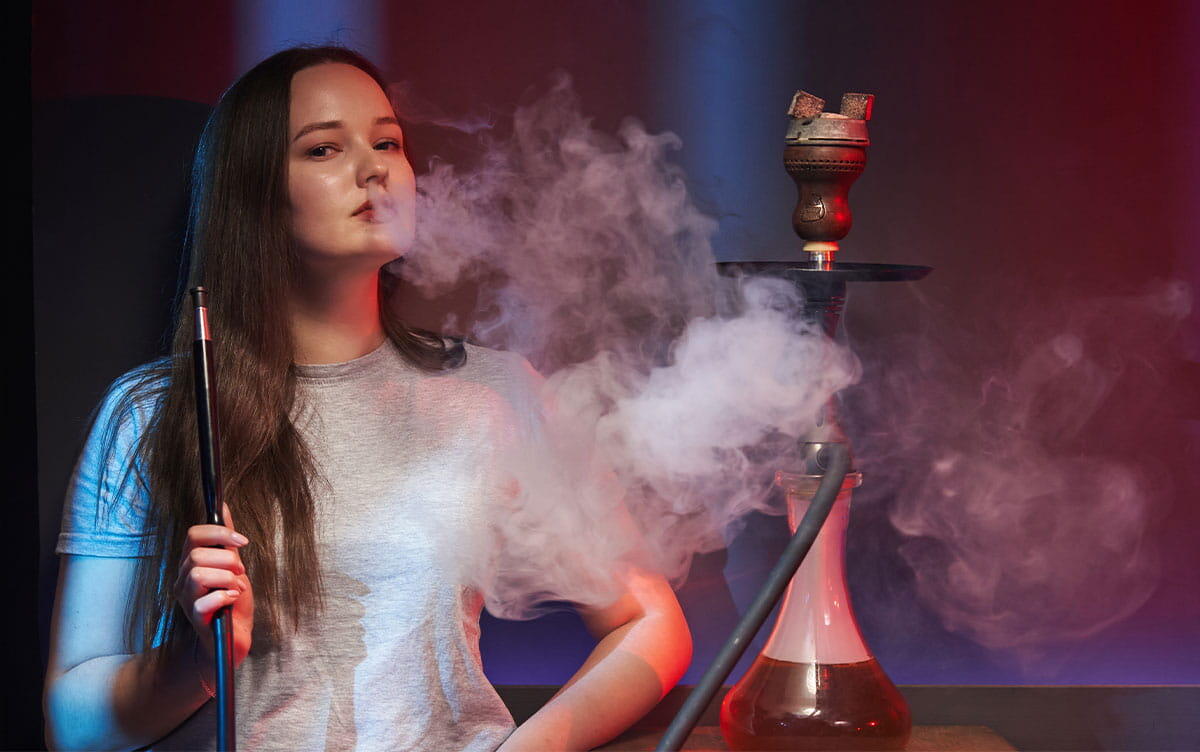 Image by Elena_Nik/Shutterstock
Researchers at University of Tsukuba conducted a systematic review of published case reports and case series examining carbon monoxide (CO) poisoning associated with waterpipe tobacco use (shisha/hookah). Waterpipe smoking has become increasingly popular worldwide, particularly among young people. The analysis revealed that CO poisoning can occur not only among active waterpipe users—including those smoking outdoors or in apparently well-ventilated environments—but also among nonusers who are merely exposed to secondhand smoke in indoor settings.
Tsukuba, Japan—Waterpipe tobacco smoking—also known as shisha, hookah, or narghile—is a method in which tobacco is heated with charcoal and the resulting smoke passes through water before being inhaled. Although the practice originated in the Middle East during the late Middle Ages, it poses a significant risk of carbon monoxide exposure because the charcoal used for heating produces CO through incomplete combustion. Within the jurisdiction of Tokyo's Third Fire District Headquarters, which covers three southwestern wards of Tokyo, emergency services recorded approximately one case of acute CO poisoning related to waterpipe smoking per month between January 2018 and June 2023. Most of these cases involved young individuals.
In the present study, the research team conducted a systematic review of six academic databases to identify case reports and case series describing CO poisoning associated with waterpipe smoking worldwide.
The review identified a total of 68 cases of acute CO poisoning. Among these, 41 cases involved individual active users, 23 cases occurred as clustered incidents involving multiple individuals (with up to 12 people affected simultaneously in indoor settings), and two cases each involved nonusers and employees working in waterpipe cafés. The most frequently reported symptom was syncope (53%), followed by headache (50%), lethargy (44%), nausea or vomiting (38%), and weakness (15%). Acute CO poisoning may present with diverse clinical manifestations, and additional reported symptoms included tremors, visual disturbances, and seizures.
Notably, approximately one-quarter of cases developed symptoms after individuals had already left the smoking venue. Furthermore, about one-fifth of cases occurred after less than 1 hour of waterpipe use, and another one-fifth occurred during outdoor smoking, indicating that even short-term or outdoor use does not eliminate the risk of CO poisoning. The review also identified 13 cases of polycythemia, a chronic condition characterized by persistently elevated hemoglobin levels and increased red blood cell counts. This condition results from prolonged exposure to carbon monoxide, which causes includes chronic hypoxia and stimulates compensatory erythrocytosis. Twelve of these cases involved individuals who reported daily waterpipe use.
Overall, this systematic review demonstrates that CO poisoning associated with waterpipe smoking can occur under conditions commonly perceived as low-risk, including short-duration use, outdoor smoking, or secondhand exposure in indoor environments.
These findings underscore the importance of raising awareness among waterpipe users and service providers regarding the potential hazards. In particular, when waterpipes are used indoors, appropriate safety measures are essential, including the installation of CO monitors and the implementation of adequate ventilation systems, as clustered poisoning events are frequently associated with enclosed environments.
###
This study was supported by a Health and Labour Sciences Research Grant (22FA1002).
Original Paper
- Title of original paper:
- Behavioral and Environmental Factors of Carbon Monoxide Poisoning and Polycythemia due to Waterpipe Smoking: An Artificial Intelligence-Assisted Systematic Review of Case Reports
- Journal:
- JMA Journal
- DOI:
- 10.31662/jmaj.2025-0208
Correspondence
Professor MURAKI Isao
Institute of Medicine, University of Tsukuba
Related Link

