


Research News
Self‑Replicating Circular RNA Persists in Extreme Environments: Insights from Hot Spring Microbiomes
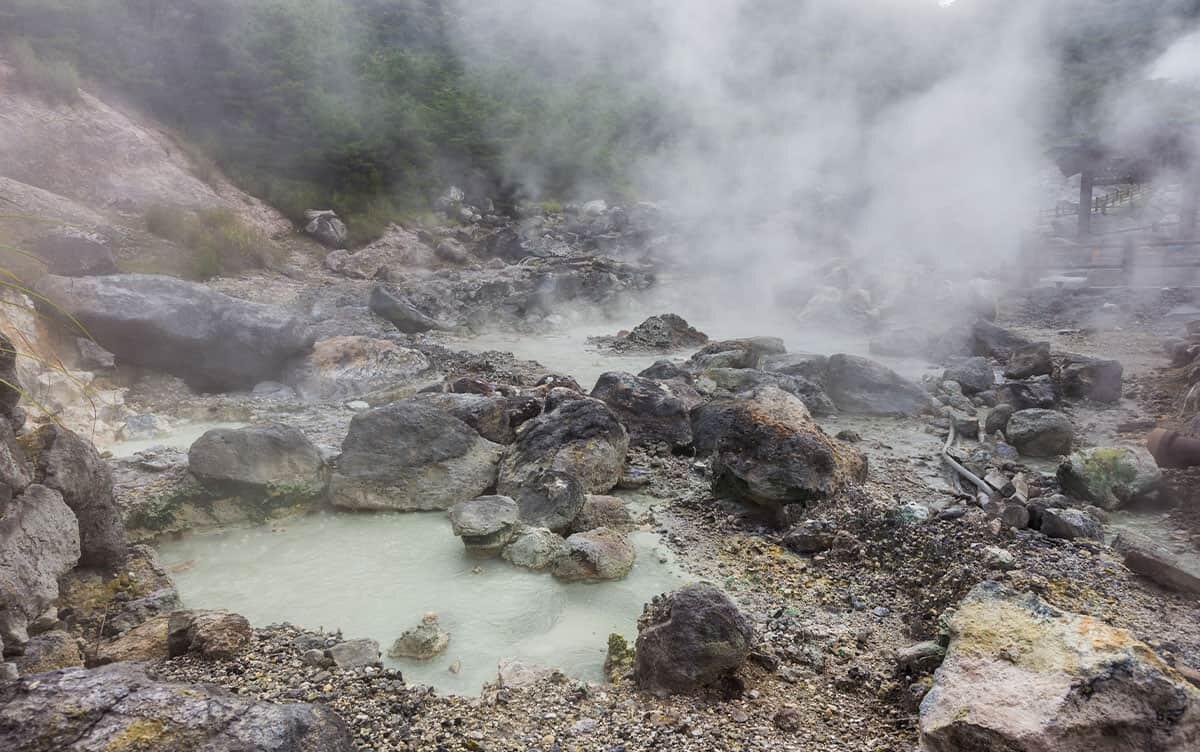 Image by kan_khampanya/Shutterstock
Researchers at University of Tsukuba have discovered a previously unknown self-replicating circular RNA in a high-temperature hot spring environment. Previously, self-replicating RNAs identified in high-temperature environments were predominantly RNA viruses with linear genomes. However, the newly identified RNA is a replicating circular RNA that is distinct from known linear RNA viruses. This discovery demonstrates that highly diverse self-replicating RNAs can persist, even under high-temperature extreme conditions.
Tsukuba, Japan—Although the genetic material of most living organisms is DNA, various self-replicating agents rely instead on RNA, including RNA viruses and viroids, which are infectious RNA molecules that are smaller and structurally simpler than RNA viruses. These RNA-based replicators are considered important for understanding the origin and early evolution of life. However, the distribution, diversity, and ecological range of self-replicating RNAs across different environments remain poorly understood.
The research team previously identified a highly unusual RNA virus in a high-temperature hot spring ecosystem. In the present study, this research was extended by searching for distinct types of self-replicating RNAs in a similar extreme environment, and a novel circular RNA replicon was identified within the microbial community inhabiting the hot spring. This RNA shows profound divergence from previously known circular RNAs at the nucleotide sequence level, constituting a new lineage that shares a key protein fold with established circular RNA replicons. Furthermore, by using this newly discovered circular RNA as a reference to survey public sequence databases, the researchers found that the diversity of circular RNA replicons is far greater than previously recognized.
Collectively, these findings provide clear evidence that diverse self-replicating RNAs exist even in high-temperature extreme environments. This work broadens the known ecological scope of RNA-based replication systems and provides important insights into their diversity, evolution, and potential roles in early biological history.
###
This study was supported by Grants-in-Aid for Scientific Research on Innovative Areas from the Ministry of Education, Culture, Science, Sports, and Technology (MEXT) of Japan (Grant Nos. 25K22486 [for S.U., Y.M. and Y.N.], 23K18146 [for S.U. and Y.M.], 24K02083 [for S.U.], and 20K20377 [for T.N.]). This work was also supported by JST FOREST Program, Grant Number JPMJFR240T [for S.U.].
Original Paper
- Title of original paper:
- Identification of hot spring Obelisk-like RNA replicons and expanded diversity of the Obelisk superfamily
- Journal:
- Nature Communications
- DOI:
- 10.1038/s41467-026-71096-6
Correspondence
Assistant Professor URAYAMA Syun-ichi
Institute of Life and Environmental Sciences, University of Tsukuba
Principal Researcher NUNOURA Takuro
Research Center for Bioscience and Nanoscience (CeBN), JAMSTEC
Senior Researcher MATSUSHITA Yosuke
Institute for Plant Protection, National Agriculture and Food Research Organization (NARO)
Related Link
Institute of Life and Environmental Sciences


