


Research News
Live Sports May Bond Spectators Through Oxytocin-Linked Heart-Rate Synchrony
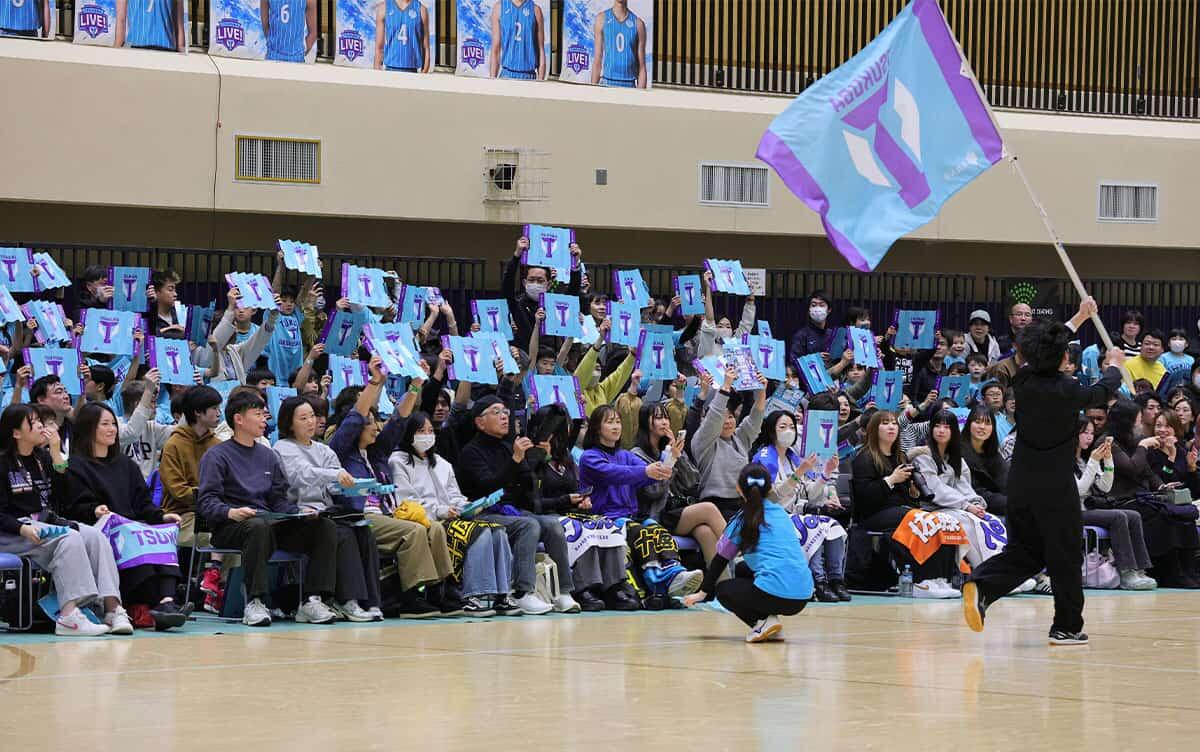 Photo by Bureau of Physical Education and Sports, University of Tsukuba
Researchers at University of Tsukuba identified baseline-dependent oxytocin changes and increased heart-rate synchrony among spectators attending a live collegiate sporting event. These responses were linked to shared enjoyment, unity with the players and fellow spectators, immersion, and intention to reattend future events.
Tsukuba, Japan—Although oxytocin is associated with social bonding and behavior, intranasal oxytocin clinical trials conducted for social dysfunction have produced modest, inconsistent effects. Therefore, researchers are seeking naturalistic, nonpharmacological ways to recruit the endogenous oxytocin system. This study examined the possible association between a single live collegiate sporting event and oxytocin dynamics, interpersonal heart-rate synchrony, and psychological indicators of social bonding among casual spectators.
The study participants included 60 adult spectators (21 women) attending a University of Tsukuba home basketball game. Participants primarily included students and local residents rather than devoted fans. Oxytocin and cortisol levels were measured using saliva samples collected before the game, at halftime, and after the game. Additionally, the participants wore heart-rate sensors and rated their enjoyment, unity with players and spectators, immersion (flow), and intention to reattend future sporting events.
Oxytocin dynamics were found to depend on pregame levels: oxytocin levels were elevated in participants with low pregame levels and maintained in those with high pregame levels. Meanwhile, cortisol levels decreased and the oxytocin-to-cortisol ratio increased. Heart-rate synchrony among the participants also increased during and after the game. Notably, oxytocin levels showed a slightly positive association with the degree of heart-rate synchrony, linking endocrine dynamics to interpersonal physiological coupling. Higher oxytocin levels and stronger synchrony were associated with greater enjoyment, stronger feelings of unity, deeper immersion, and greater intention to reattend future live sporting events. Mediation analyses suggested a link between these physiological responses and positive experiential and motivational outcomes, partially mediated through enjoyment and perceived unity.
These findings suggest that coordinated salivary oxytocin dynamics and interpersonal heart-rate synchrony are socio-physiological processes associated with social connection during live sports events. These associations, observed among casual spectators at a modest collegiate event, highlight the potential social value of shared spectatorship outside elite competitions and highly devoted fan communities. Therefore, live sporting events may offer a simple, scalable, nonpharmacological context in which oxytocin-related social experiences arise naturally through shared enjoyment and collective engagement.
###
This work was supported in part by the Japan Sports Agency's 'Sports in Life' project (to K.K. and T.M.); a Special Research Grant from the Toyota Foundation (D20-ST-0034 to T.M.); and the Fusion Oriented Research for Disruptive Science and Technology (FOREST) program of the Japan Science and Technology Agency (JST; JPMJFR205M to T.M.).
Original Paper
- Title of original paper:
- Endogenous oxytocin-linked heart-rate synchrony and social connection during live sports spectatorship
- Journal:
- Translational Psychiatry
- DOI:
- 10.1038/s41398-026-04265-2
Correspondence
Associate Professor MATSUI Takashi
Institute of Health and Sport Sciences, University of Tsukuba
YAMAGUCHI Takafumi
Doctoral Program in Physical Education, Health and Sport Sciences, Degree Programs in Comprehensive Human Sciences, Graduate School of Comprehensive Human Sciences, University of Tsukuba
Related Link
Institute of Health and Sport Sciences


