


Research News
Magnetic Field Measurements Reveal Internal Current Distribution in Fuel Cells
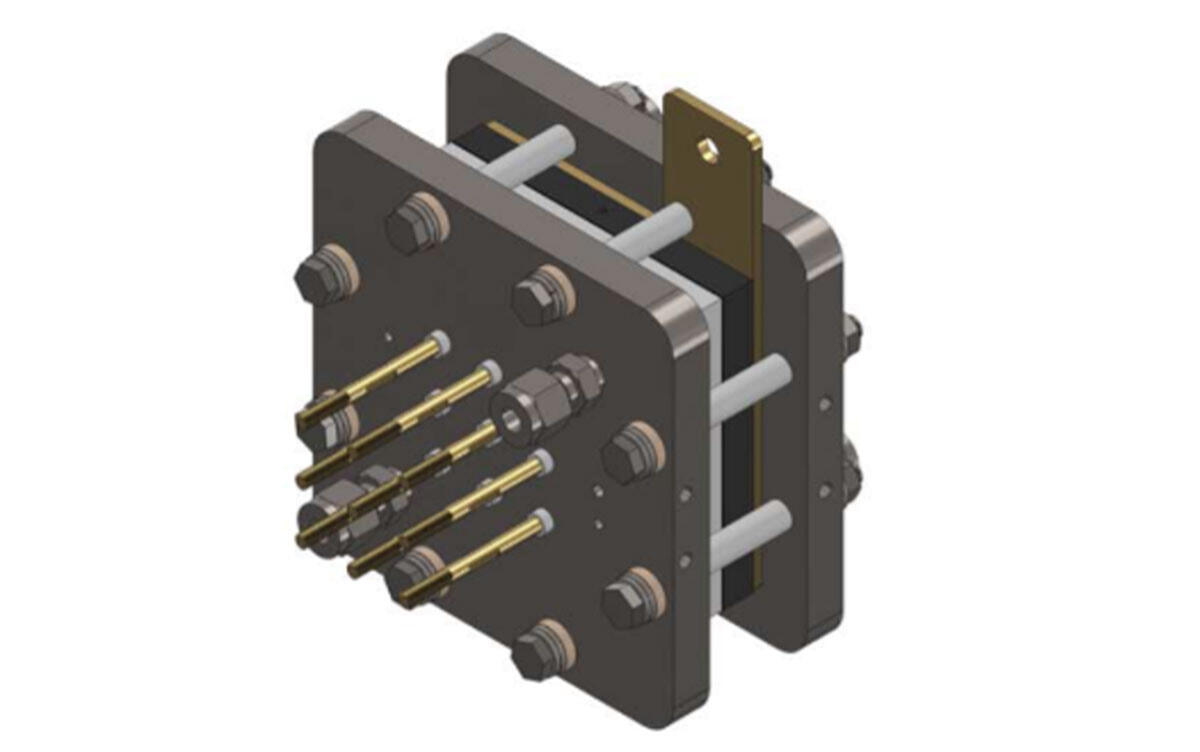 Cited from the original paper (DOI: 10.1016/j.ijhydene.2026.157135)
Researchers at University of Tsukuba have developed a model for estimating the internal current distribution of a fuel cell from magnetic field measurements. By optimizing the model against experimentally obtained current and magnetic field data, the researchers demonstrated the model's ability to reproduce characteristic current distribution patterns associated with fuel cell malfunctions. These findings highlight the potential of magnetic-field-based monitoring as a noninvasive approach for diagnosing fuel cell operating conditions and identifying early indications of failure.
Tsukuba, Japan—Proton-exchange membrane fuel cells are promising clean power-generation technologies that do not emit carbon dioxide during operation. However, issues such as flooding (i.e., the accumulation of water generated during operation) and dry-out (i.e., when the electrolyte membrane becomes dehydrated) can result in an uneven internal current distribution. This uneven distribution can impair cell performance and accelerate localized material degradation. Therefore, reliable monitoring of the internal state of a fuel cell during operation is essential; however, conventional techniques for measuring internal current distributions often require sensors or circuit boards to be integrated into the cell, potentially altering its structure and operating characteristics.
To address this limitation, the researchers developed a noncontact estimation method based on the relationship between electric current and generated magnetic field. The proposed method was experimentally verified using a specialized fuel cell with a current collector plate divided into nine sections. Direct current measurements in each section served as reference data, while magnetic field measurements were collected at the nine sections to reconstruct the internal current distribution. The researchers found that initializing the calculation with the load current divided equally among the nine sections substantially reduced estimation errors. Furthermore, the reconstructed distributions captured characteristic trends associated with fuel cell malfunctions. Under flooding conditions, current was greater on the air inlet side (upstream), whereas under dry-out conditions, the current was greater on the air outlet side (downstream).
These results demonstrate the feasibility of estimating internal fuel cell conditions via magnetic field measurements without modifying the cell structure. The proposed method could support real-time, noncontact monitoring and contribute to the development of diagnostic technologies for fuel cells. Future work will focus on refining the estimation model, improving numerical stability, and enhancing its performance under fluctuating load conditions, with the goal of developing an early-warning diagnostic system for fuel cell degradation and failure.
Original Paper
- Title of original paper:
- Experimental investigation of current distribution analysis method for proton-exchange membrane fuel cells using magnetic sensors
- Journal:
- International Journal of Hydrogen Energy
- DOI:
- 10.1016/j.ijhydene.2026.157135
Correspondence
Assistant Professor AKIMOTO Yutaro
Institute of Systems and Information Engineering, University of Tsukuba
Related Link
Institute of Systems and Information Engineering

