


Research News
Detecting "Pressure Anisotropy" Using Zirconia Nanoparticles
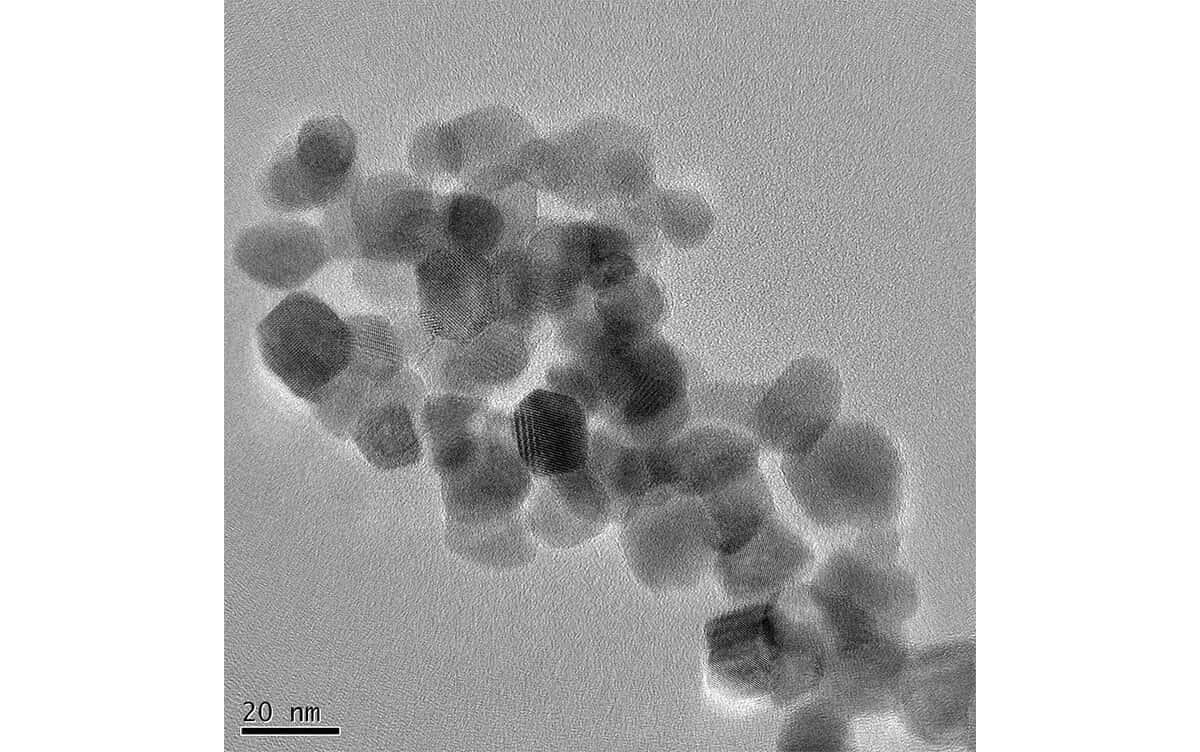 Cited from the original paper (DOI: 10.1002/ejic.70302)
Researchers at University of Tsukuba have discovered that the crystal structure of zirconia nanoparticles remains stable under uniform pressure applied from all directions but changes under anisotropic pressure. This unique property is expected to lead to new technologies for detecting and evaluating pressure anisotropy, which has been difficult to assess using conventional methods.
Tsukuba, Japan—Zirconia is a ceramic material with high mechanical strength, heat resistance, and wear resistance, and it is widely used in applications ranging from industrial products to medical and dental materials. Zirconia can adopt several crystal structures, of which the monoclinic phase is stable at room temperature under normal conditions. When zirconia particles are reduced to the nanometer scale, however, the tetragonal phase that normally forms only at high temperatures can be retained even at room temperature.
In this study, the research team focused on tetragonal zirconia nanoparticles and investigated how their crystal structure changes depending on how pressure is applied. Under hydrostatic pressure, which is applied uniformly from all directions, the tetragonal phase remained largely unchanged. In contrast, when anisotropic pressure was applied, the tetragonal phase transformed into the monoclinic phase, and this transformation occurred more readily as the pressure anisotropy increased. These properties suggest that such structural changes could be used to detect and evaluate pressure anisotropy, which has been difficult to assess using conventional methods. The approach is expected to find applications across the many fields that use high-pressure technologies, including food processing, medicine, and materials research.
###
This research was supported in part by the Japan Science and Technology Agency FOREST Program (JPMJFR213Q), the Japan Society for the Promotion of Science Grant-in-Aid for Challenging Exploratory Research (25K22266), Scientific Research (A) (25H00866) from JSPS KAKENHI, and the JST Advanced Technologies for Carbon-Neutral (JPMJAN23A2).
Original Paper
- Title of original paper:
- Hydrostatic and Anisotropic Pressure Responses in Tetragonal Zirconia Nanoparticles
- Journal:
- European Journal of Inorganic Chemistry
- DOI:
- 10.1002/ejic.70302
Correspondence
Professor TOKORO Hiroko
Institute of Pure and Applied Sciences, University of Tsukuba
Related Link
Institute of Pure and Applied Sciences


