


Research News
Telemedicine Use Increased in Japan, but Age-Related and Socioeconomic Disparities Did Not Clearly Narrow Over Time
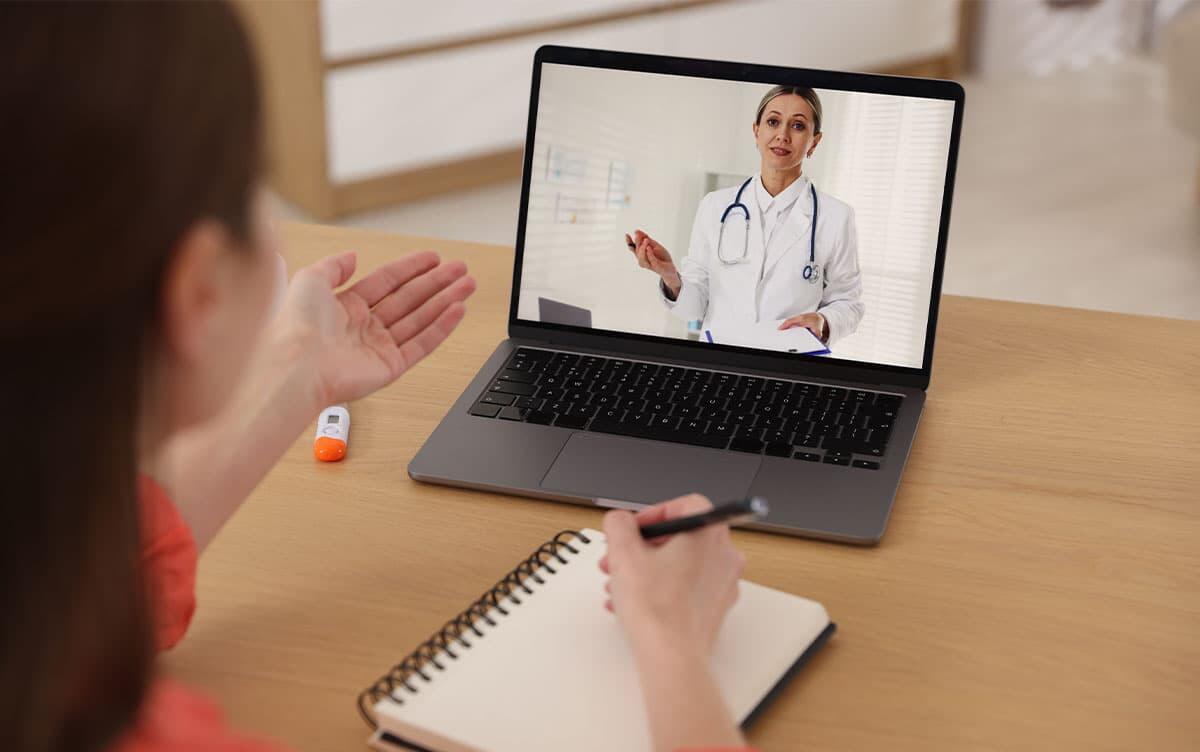 Image by New Africa/Shutterstock
A longitudinal study by researchers at the University of Tsukuba found that although telemedicine use increased across many age groups in Japan between 2020 and 2024, disparities in telemedicine adoption did not diminish over time. In particular, uptake among older adults increased only modestly, resulting in a widening gap between younger and older age groups. The findings suggest that a broader diffusion of telemedicine does not necessarily lead to more equitable adoption.
Tsukuba, Japan—Telemedicine came into wide use during and after the COVID-19 pandemic. However, access to and use of telemedicine may vary according to factors such as age, educational attainment, income, employment status, and place of residence, though it has long been unclear whether these disparities would narrow as the use of telemedicine spread.
In this study, researchers followed 10,818 adults aged 18-75 years who participated in both the 2020 and 2024 waves of a nationwide Internet survey in Japan to identify changes in the proportions of individuals who had ever used telemedicine by age, educational attainment, income level, employment status, and urban or rural residence.
It was found that the proportion of participants who had used telemedicine increased from 2.6% in 2020 to 7.0% in 2024. However, the rate of increase differed by population group, rising substantially among younger adults but only modestly among older adults, leading to a widening gap by age group. The increase was also smaller among participants who were unemployed at baseline than among higher-status nonmanual workers. In contrast, trends over the four-year period did not significantly differ by educational attainment, household income, or urban versus rural residence. Overall, although telemedicine use expanded, there was no clear evidence that disparities in its adoption narrowed over time.
These findings indicate that the continued expansion of telemedicine alone may not be sufficient to reduce age- and socioeconomic-related disparities in its use, suggesting that for more equitable telemedicine adoption, it may be necessary to not only promote broader adoption but also provide targeted support for individuals who face barriers to accessing and using digital health services.
Because the study was based on an Internet survey, the findings may not fully represent the experience of individuals with limited or no Internet access.
###
This study was funded by the Japan Society for the Promotion of Science (24K02701) and the TRiSTAR program (the Strategic Professional Development Program for Young Researchers conducted by the Ministry of Education, Culture, Sports, Science and Technology).
Original Paper
- Title of original paper:
- Trends in Age and Socioeconomic Inequalities in Telemedicine Adoption in Japan, 2020-2024: A Longitudinal Panel Study
- Journal:
- Journal of Medical Internet Research
- DOI:
- 10.2196/99994
Correspondence
Associate Professor MIYAWAKI Atsushi
Institute of Medicine, University of Tsukuba
Related Link


