


Research News
Antimicrobial Peptides Derived from the Drosophila Sleep-inducing Protein Nemuri Trigger Ribosomal Condensation to Inhibit Protein Synthesis
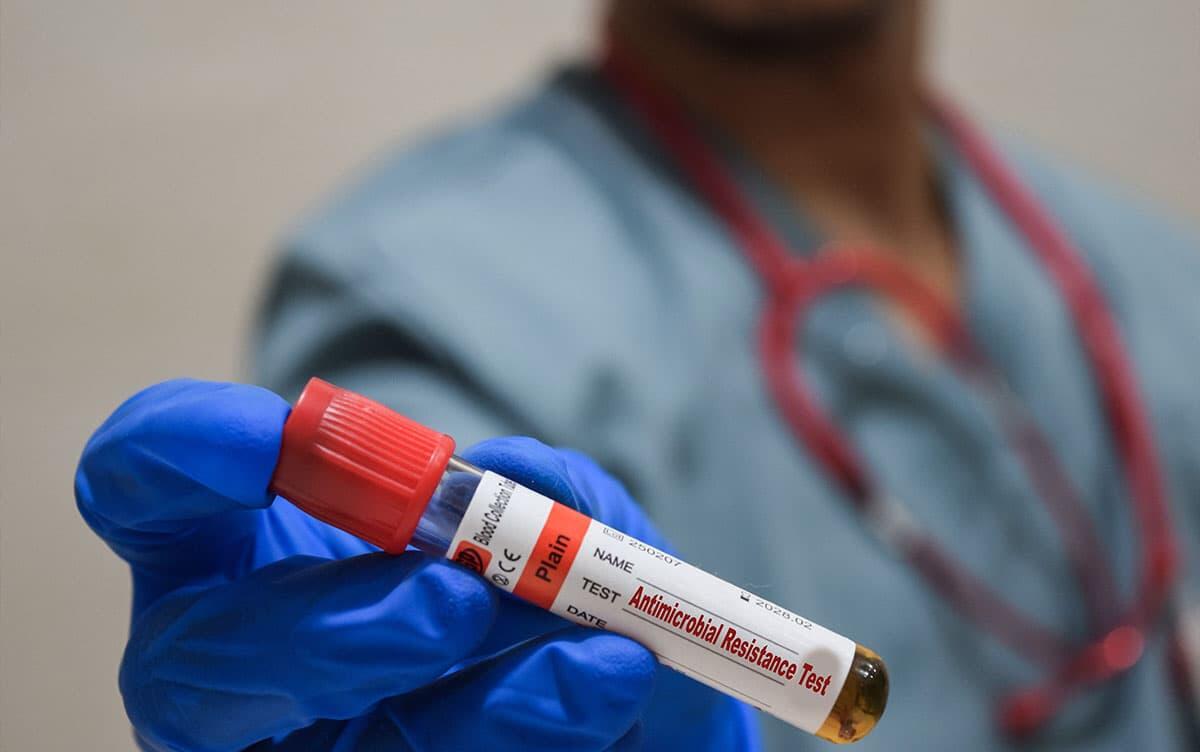 Image by bangoland/Shutterstock
Researchers at University of Tsukuba and collaborating institutions have identified short antimicrobial peptides derived from Nemuri, a sleep-inducing protein in the fruit fly Drosophila melanogaster. The peptides inhibit the growth of a broad range of microorganisms, including drug-resistant bacteria. They act by altering the spatial organization and dynamic behavior of bacterial ribosomes, thereby suppressing protein synthesis. These findings reveal the spatial organization and dynamics of bacterial ribosomes as a potential previously underexplored target for antimicrobial development.
Tsukuba, Japan—As antibiotic-resistant bacteria continue to pose a global health threat, there is an urgent need for antimicrobial agents that act through mechanisms distinct from those of existing antibiotics. This study identified several short peptides derived from Nemuri, a sleep-inducing protein previously discovered in Drosophila melanogaster, revealing their ability to inhibit the growth of a wide range of microorganisms, including clinically important drug-resistant bacterial strains. In Escherichia coli and Staphylococcus aureus, the peptides, termed Nemuri peptides, also exhibited bactericidal activity at concentrations close to those required to inhibit bacterial growth. They were shown to enter bacterial cells and accumulate in ribosome- and RNA-rich regions. No substantial membrane disruption was detected at antimicrobial concentrations under the conditions tested. The peptides interacted broadly with RNA molecules and ribosomal surfaces, inducing condensation-like remodeling of ribosome-rich regions. This process reduced ribosomal mobility and suppressed global protein synthesis. The peptides also showed low toxicity toward cultured insect and mammalian cells. These findings suggest that Nemuri peptides inhibit bacterial protein synthesis via a mechanism involving changes in the physical organization and dynamic properties of ribosome-rich regions within bacterial cells.
This study highlights the potential of Nemuri peptides as a starting point for developing antimicrobial agents against drug-resistant bacteria. Further studies, including evaluations of efficacy and safety in animal models of bacterial infection, are required to explore this potential.
###
This work was supported by the Japan Society for the Promotion of Science KAKENHI (grant numbers JP24KJ0004 and JP24K18076 to S.N.; JP24K09392 to T. Niwa; JP21H05129, JP21H05130, and JP24H02302 to H.Y.; JP22H00411 to N.N.N. and H.T.; JP23K20044, JP24H00060, JP25H01320, and JP25H01321 to N.N.N.; and JP20H03291, JP21H05133, and JP24K02059 to H.T.); the Japan Agency for Medical Research and Development (grant numbers JP21wm0525011 to N.A.I. and JP21zf0127005 to H.T. and S.N.); the Japan Science and Technology Agency through PRESTO (grant numbers JPMJPR22E5 to H.S.; JPMJPR21E1 to N.A.I.; JPMJPR20E5 to S.K.; and JPMJPR22E8 to H.T.) and CREST (grant number JPMJCR20E3 to N.N.N.); World Premier International Research Center Initiative (WPI), MEXT, Japan (to S.N. and H.T.); the IIIS Start-up Grant (to S.N.); the Chugai Foundation for Innovative Drug Discovery Science (C-FINDs; to M.H. and N.N.N.); the Kanae Foundation (to H.T.); the Inamori Foundation (to H.T.); the Mitsubishi Foundation (to H.T.); the Takeda Science Foundation (to H.T. and N.N.N.); and the SHIONOGI INFECTIOUS DISEASE RESEARCH PROMOTION FOUNDATION (to N.N.N., H.T. and M.I.).
Original Paper
- Title of original paper:
- Antimicrobial peptides derived from Nemuri induce ribosomal condensation to inhibit translation
- Journal:
- Nature Communications
- DOI:
- 10.1038/s41467-026-78960-5
Correspondence
Specially Appointed Assistant Professor TODA Hirofumi
Assistant Professor Yoan Cherasse
International Institute for Integrative Sleep Medicine (WPI-IIIS), Tsukuba Institute for Advanced Research (TIAR), University of Tsukuba
Professor NODA N. Nobuo
Institute for Genetic Medicine, Hokkaido University
Related Link
Tsukuba Institute for Advanced Research (TIAR)
International Institute for Integrative Sleep Medicine (WPI-IIIS)
