


Research News
Influence of Dog Ownership on Exercise Self-Efficacy and Physical Activity: Differences Before and After COVID-19
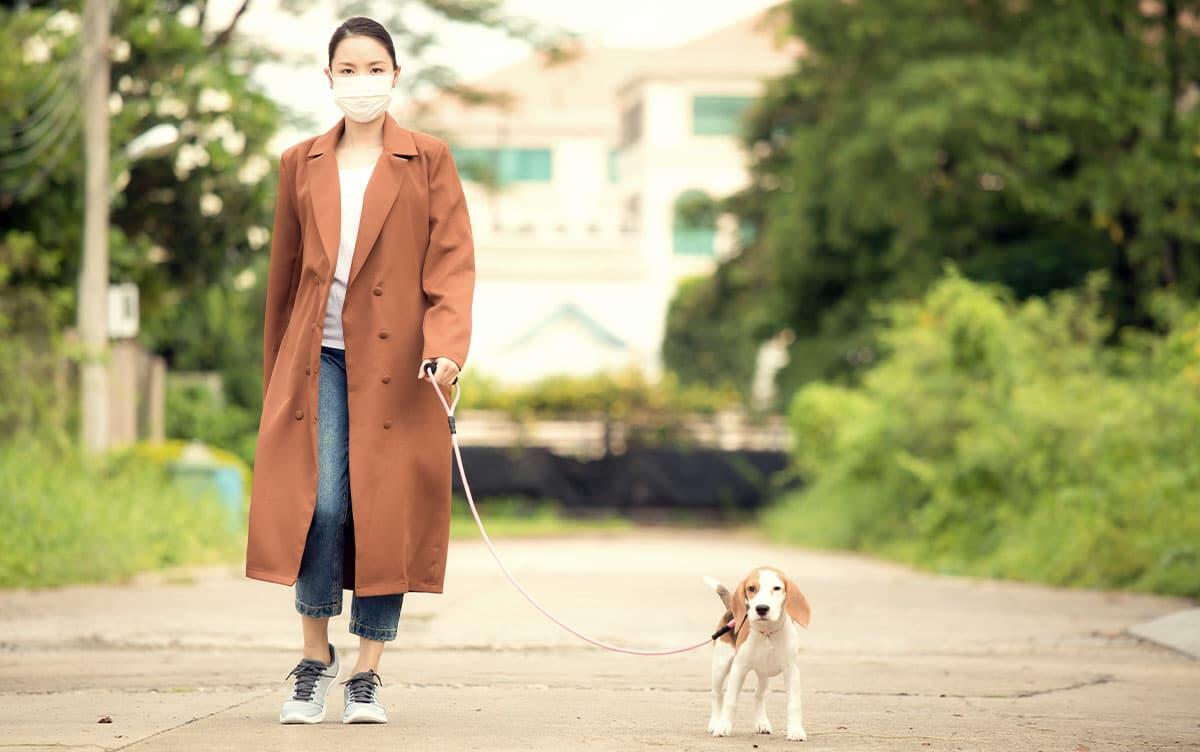 Image by Pixpan_creative/Shutterstock
Researchers at University of Tsukuba examined how dog ownership and exercise self-efficacy affected physical activity among Japanese office workers before, during, and after the COVID-19 pandemic. Findings show that dog owners exhibited a significant decline in physical activity during the pandemic but returned to prepandemic levels afterward. Across all time points, exercise self-efficacy remained a strong predictor of physical activity.
Tsukuba, Japan—The COVID-19 pandemic resulted in a widespread decline in physical activity. To explore this trend, the researchers conducted a web-based survey to examine the influence of dog ownership and exercise self-efficacy on physical activity among Japanese office workers during restrictions related to the pandemic. A total of 414 (including those from 124 dog owners) responses were analyzed. Data on physical activity, which was assessed using the International Physical Activity Questionnaire, exercise self-efficacy, and dog-walking habits were obtained using the recall method at three time points: before, during, and after the COVID-19 pandemic.
Results revealed that dog owners exhibited a significant decline in physical activity during the pandemic but returned to prepandemic levels afterward. However, non-dog owners displayed no significant changes across the three time points. Before the COVID-19 pandemic, dog ownership was associated with high levels of exercise self-efficacy, which consequently predicted greater physical activity. However, during and after the pandemic, dog ownership no longer influenced exercise self-efficacy; instead, only exercise self-efficacy remained a strong predictor of physical activity. Among dog owners, dog-walking time remained relatively stable across all time points, suggesting that self-efficacy for dog walking in maintaining this routine sustained physical activity even under restrictive conditions.
These findings highlight the role of pet ownership in enhancing exercise self-efficacy and may inform the development of programs for promoting physical activity, particularly during periods of environmental or social restriction.
Original Paper
- Title of original paper:
- Effects of dog ownership and exercise self-efficacy on physical activity of Japanese office workers during the COVID-19 pandemic
- Journal:
- Discover Public Health
- DOI:
- 10.1186/s12982-025-01232-y
Correspondence
Professor NAKATA Yoshio
Researcher Yutong Shi
Institute of Health and Sport Sciences, University of Tsukuba
Related Link
Institute of Health and Sport Sciences
