


Research News
Human-AI Relationships in Fiction: A Theoretical Cultural Framework of AI Representations
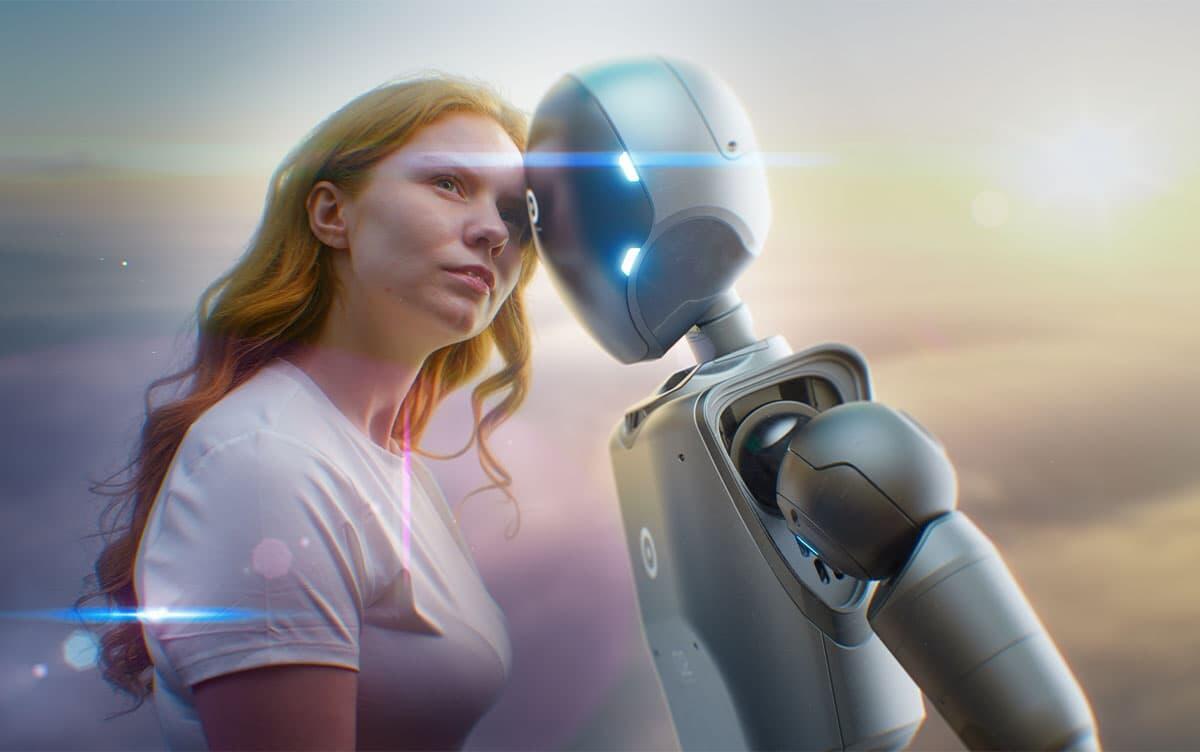 Image by Frame Stock Footage/Shutterstock
Researchers at University of Tsukuba examined how artificial intelligence (AI) is represented in fictional media, including films, animation, literature, and games. Their analysis indicates that AI is portrayed not only as a technological tool, but also as a supporter, collaborative companion, and, in some cases, an equal partner. These portrayals highlight the diversity and evolution of imagined human-AI relationships across cultural narratives.
Tsukuba, Japan—Through everyday interactions, such as receiving assistance, advice, and emotionally responsive feedback, people increasingly perceive artificial intelligence (AI) not only as a functional system but also as a social entity that occupies a role within society. However, how humans and AI can coexist harmoniously remains an open question. Technical performance alone does not fully explain how people come to understand and accept AI as a relational partner.
In this study, the researchers examined AI characters depicted in fictional works and conducted a systematic analysis of how human-AI coexistence is represented as a relationship. The findings indicate that fictional AI is portrayed with varying roles and degrees of autonomy, ranging from simple tools to supportive figures, collaborative partners, and, in some cases, autonomous agents that pursue their own goals.
Based on these findings, the study proposes a theoretical model that conceptualizes AI not merely as a collection of capabilities or functions, but as an entity that forms relationships with humans. By framing fictional AI as cultural prototypes—sites for ethical rehearsal and moral imagination—the study offers a comparative framework for examining how AI is positioned as a social and moral presence. This perspective provides insights relevant to the future design of interactive and educational AI systems and contributes to broader discussions on AI ethics, human-AI coexistence, and the social acceptance of AI.
###
This work was partly supported by JSPS KAKENHI Grant Number 23K25691.
Original Paper
- Title of original paper:
- Fictional Prototypes of AI-Human Coexistence and Relationality
- Journal:
- AI & Society
- DOI:
- 10.1007/s00146-025-02830-9
Correspondence
Associate Professor HOSHINO Junichi
Institute of Systems and Information Engineering, University of Tsukuba
Related Link
Institute of Systems and Information Engineering
