


Research News
Impact of Japan's Indoor Smoke-Free Laws on the Prevalence of Smoke-Free Establishments
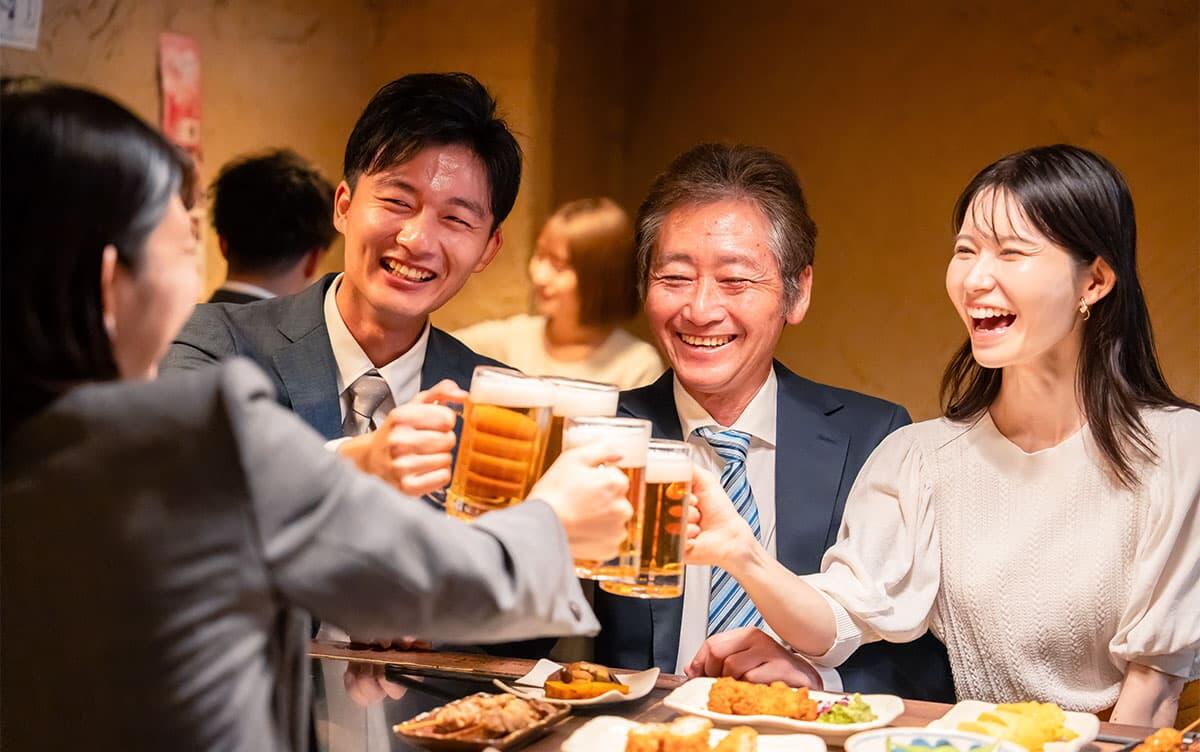 Image by maroke/Shutterstock
A multi-institutional research team in Japan evaluated the impact of the Revised Health Promotion Law and related local ordinances on indoor smoking policies in restaurants and bars. Their analysis identified a modest but significant increase in the proportion of smoke-free establishments following the full enforcement of the national indoor smoking ban in April 2020. Additional increases were observed in jurisdictions covered by stronger passive smoking prevention ordinances implemented by the Tokyo Metropolitan Government and Chiba City.
Tsukuba, Japan—To reduce the adverse health effects associated with exposure to second-hand smoke, Japan fully enforced the Revised Health Promotion Law in April 2020, introducing a nationwide indoor smoking ban in restaurants and similar hospitality establishments. However, the law includes temporary exemptions that permit pre-existing small-scale restaurants and bars to allow indoor smoking, provided that individuals under the age of 20 are not exposed.
To mitigate the potential public health impact of these exemptions, the Tokyo Metropolitan Government and Chiba City simultaneously implemented stricter passive smoking prevention ordinances designed to further promote smoke-free environments. Therefore, the research team assessed the effects of both the national legislation and local ordinances using data obtained from a major online restaurant review platform covering the period 2016-2022.
The researchers estimated that the proportion of smoke-free establishments nationwide increased by 5.7% points immediately after the enforcement of the Revised Health Promotion Law, compared with the period immediately preceding its implementation. In areas governed by the Tokyo Metropolitan Government and Chiba City, where additional passive smoking prevention ordinances were concurrently enforced, the proportion of smoke-free establishments was estimated to have increased by 13.5% points. Of this increase, 7.8% points were specifically attributable to the local ordinances. As of December 2022, the estimated proportions of smoke-free establishments were 68.3% for restaurants, 70.2% for cafés, 32.8% for izakaya (Japanese-style pubs), and 25.0% for bars.
This study demonstrates that the implementation of the national law and complementary local ordinances was associated with a modest increase in the proportion of smoke-free establishments. However, the findings also indicate that a substantial number of establishments continue to permit indoor smoking, largely because of the exemptions allowed under the current legislation. To further reduce opportunities for exposure to second-hand smoke, the researchers emphasize the importance of eliminating existing exemptions and strengthening the enforcement of current smoke-free regulations.
###
This study was supported by the Health Labour Sciences Research Grants (19FA1005 and 22FA1002) from the Japanese Ministry of Health, Labour and Welfare, and a medical research grant from the Osaka Association of Adult Diseases Prevention obtained by Dr. Muraki.
Original Paper
- Title of original paper:
- Impact of ban and ordinances against indoor smoking on the proportion of smoke-free establishments in restaurants, izakaya, and bars in Japan: Interrupted time-series analysis of restaurant database
- Journal:
- Public Health
- DOI:
- 10.1016/j.puhe.2026.106146
Correspondence
Professor MURAKI Isao
Institute of Medicine, University of Tsukuba
Specially Appointed Assistant Professor KATAOKA Aoi
Division of Molecular Epidemiology, Department of Future Medical Science, Kobe University
Professor ITO Yuri
Department of Medical Statistics Research and Development Center, Osaka Medical and Pharmaceutical University
Division Chief KATANODA Kota
Division of Population Data Science, National Cancer Center Institute for Cancer Control
Related Link


