


Research News
Pill Bugs Don't Just Use The Minerals They Eat—They Rebuild Them Inside Their Bodies
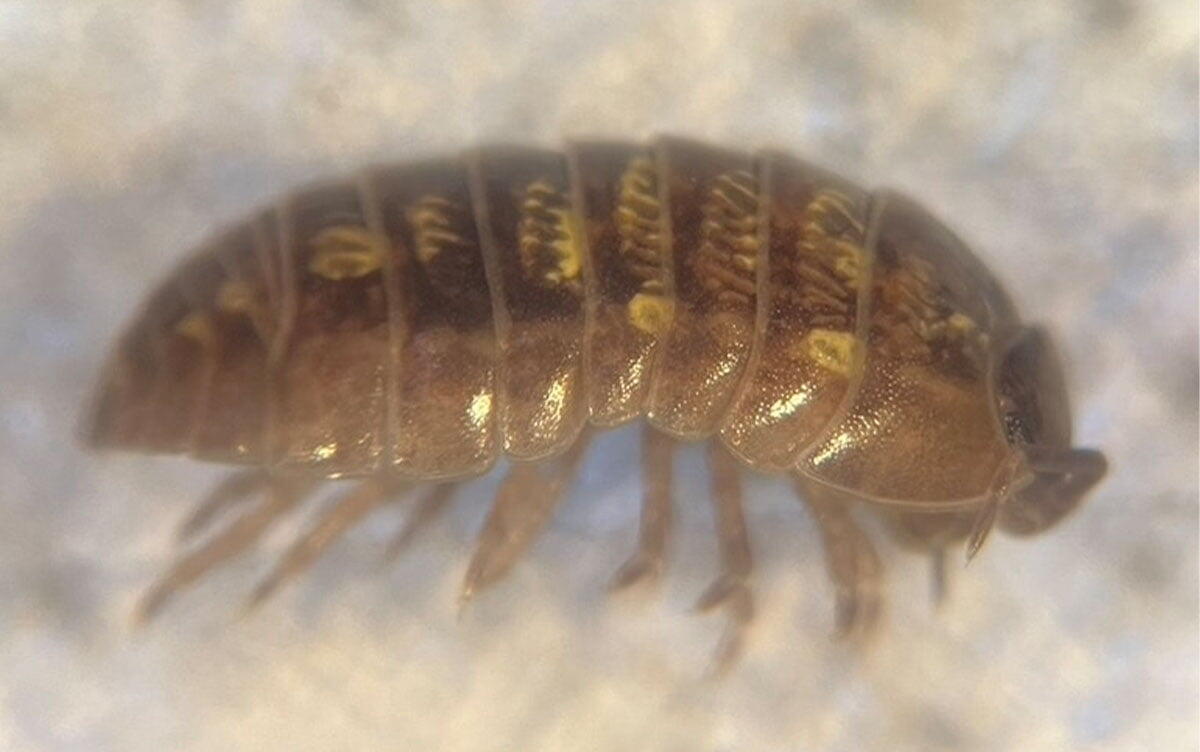
Placing small stones in a bug cage is beneficial when raising pill bugs, a type of woodlouse. Researchers at the University of Tsukuba have discovered that pill bugs do not directly incorporate ingested calcium carbonate (CaCO₃) minerals into their tergite cuticles. Instead, they undergo an energetically costly process to reconstruct these minerals within their bodies before forming their tergite cuticles. This finding helps explain how organisms biologically control mineral formation.
Tsukuba, Japan—Many organisms, including crustaceans and mollusks, use minerals such as calcium carbonate (CaCO₃) to construct hard exoskeletons or shells. Called biomineralization, this process plays a key role in fields ranging from biomaterials science to evolutionary biology.
The exoskeleton (tergite cuticle) of woodlice (Armadillidium vulgare) consists primarily of CaCO₃ and helps protects these organisms from predators and environmental stress. Placement of stones in rearing environments supports proper shell formation; however, the influence of different mineral types on tergite cuticle formation has not been systematically examined.
CaCO₃ occurs in multiple crystal forms, including calcite and aragonite, which have the same chemical composition but different crystal structures. In this study, woodlice were reared for approximately 60 days while being supplied with calcite or aragonite. Another group was raised with quartz, which does not contain CaCO₃, as the control. The crystal structure and textural characteristics of their tergite cuticles were analyzed using scanning electron microscopy, Raman spectroscopy, and synchrotron X-ray diffraction.
Woodlice fed with calcite or aragonite developed strongly mineralized tergite cuticles with thick, well-organized layers. In contrast, individuals reared with quartz showed weak mineralization and formed thin cuticular structures.
Further analysis revealed that an amorphous precursor called calcite-type amorphous calcium carbonate (ACC) formed in the tergite cuticles. Remarkably, the final crystalline mineral produced in the tergite cuticles was calcite, even on the aragonite-fed animals.
Results show that pill bugs, a familiar type of woodlouse, do not simply incorporate ingested CaCO₃ minerals as building blocks. Instead, they actively restructure CaCO₃ within their bodies to form their tergite cuticles. This study highlights the sophisticated biological control underlying mineral formation and provides new insights into the mechanisms by which organisms regulate biomineralization.
###
This work was supported by Geo-Kagaku Center research grant 2023.
Original Paper
- Title of original paper:
- Effects of Mineral Nutrition on the Cuticle Structure of Armadillidium vulgare
- Journal:
- Journal of Structural Biology
- DOI:
- 10.1016/j.jsb.2026.108312
Correspondence
Associate Professor KYONO Atsushi
Institute of Life and Environmental Sciences, University of Tsukuba
Related Link
Institute of Life and Environmental Sciences


