


Research News
Even Morphologically Similar Pollinators Carry Distinct Pollen Assemblages
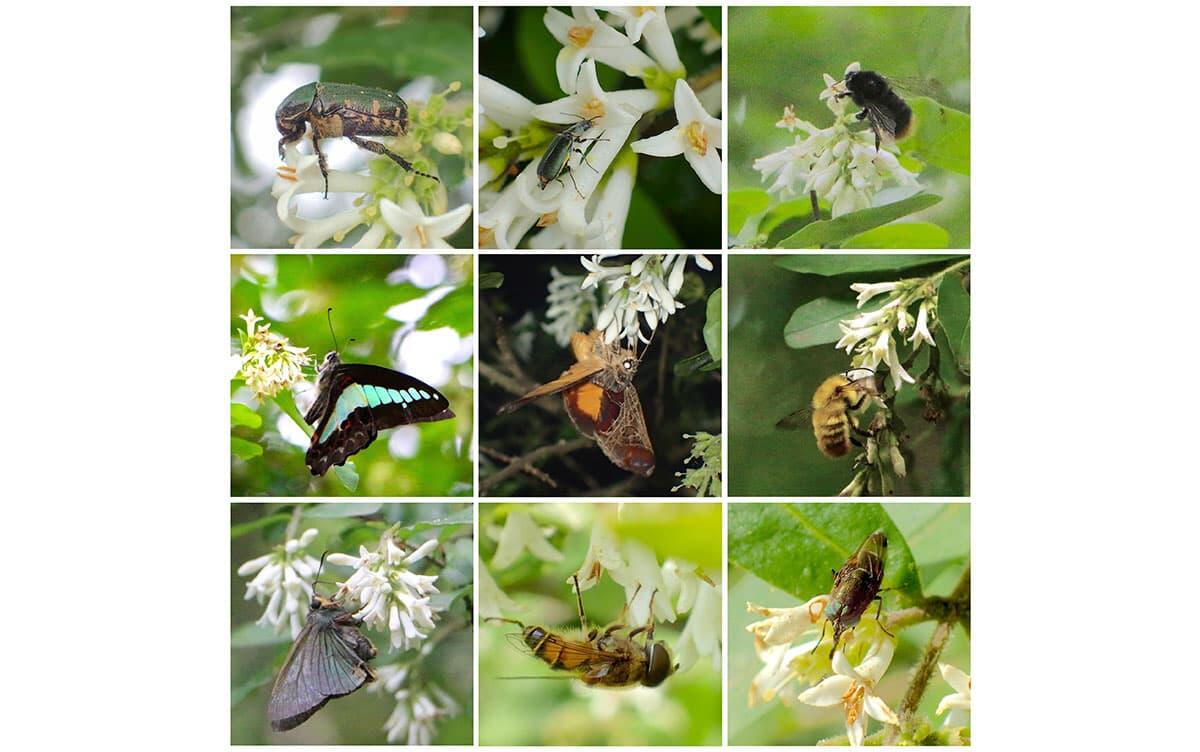
Pollinators are commonly classified into functional groups based on similarities in morphology and behavior, under the assumption that such groupings reflect comparable contributions to plant reproduction. Researchers at University of Tsukuba challenge this conventional assumption by analyzing pollen carried on insect bodies. The team found that even among morphologically similar pollinators differed substantialy in both the types and composition of pollen they transported. These differences suggest considerable variation in floral fidelity—the tendency to repeatedly visit specific plant species—and may also affect the potential for heterospecific pollen transfer (HPT).
Tsukuba, Japan—The body size, morphology, and associated behavioral traits of flower-visiting insects strongly influence the quantity of pollen they transport. Thus, pollinators with similar appearances are often assumed to exert similar ecological effects on plants. However, pollinators' effects on plants are not determined solely by the amount of pollen they carry. When insects move between different plant species, they may deposit heterospecific pollen (pollen from other plant species) on stigmas, potentially interfering with successful pollination. This raises the question of whether floral fidelity—the extent to which insects concentrate their visits on particular plants species—is also shared among morphologically similar pollinator groups.
Researchers investigated this issue through a quantitative comparison of body pollen carried by diverse insect groups. The study focused on border privet (Ligustrum obtusifolium), a generalist plant species that attracts a wide range of insect pollinators. Only individuals collected from flowers of the same Ligustrum plants were analyzed to ensure that all insects were compared under the same floral environment. Insects were systematically collected during diurnal and nocturnal periods, and the pollen attached to their bodies was identified and quantified. The researchers found that both pollen composition and body pollen heterospecificity differed significantly both within and between insect groups.
Among the key findings, the pollen carried by nocturnal moths and eusocial bees (Bombus ardens) was more strongly dominated by a small number of plant species than that carried by butterflies and solitary bees, respectively. Notably, within a single bumble bee species, males exhibited a stronger bias toward specific plant species than females. In contrast, the hairy scarab beetle Gametis jucunda carried pollen from a wider range of plant species and showed a relatively high degree of heterospecificity than other beetles. Similarly, although hoverflies (syrphid flies) and other dipteran insects transported pollen from multiple plant taxa, their pollen assemblages differed markedly in species composition.
These findings demonstrate that even morphologically similar pollinators can differ markedly in the diversity and heterospecificity of pollen they transport. Such variation has important implications for understanding how different pollinators influence plant reproduction and evolution. More broadly, the results indicate that conventional morphological or taxonomic classifications of pollinators may not adequately capture their ecological functions, particularly with respect to HPT.
###
This work was supported by a JSPS Grants-in-Aid for Scientific Research (KAKENHI no. 19K06834).
Original Paper
- Title of original paper:
- Heterospecificity of body pollen varies across and within trait-based groups of pollinators
- Journal:
- Arthropod-Plant Interactions
- DOI:
- 10.1007/s11829-026-10249-2
Correspondence
TERADA Kohei
Graduate School of Life and Environmental Sciences, University of Tsukuba
Assistant Professor OHASHI Kazuharu
Institute of Life and Environmental Sciences, University of Tsukuba
Related Link
Institute of Life and Environmental Sciences
