


Research News
High Prevalence of Poor Sleep Quality Among Japanese Esports Players
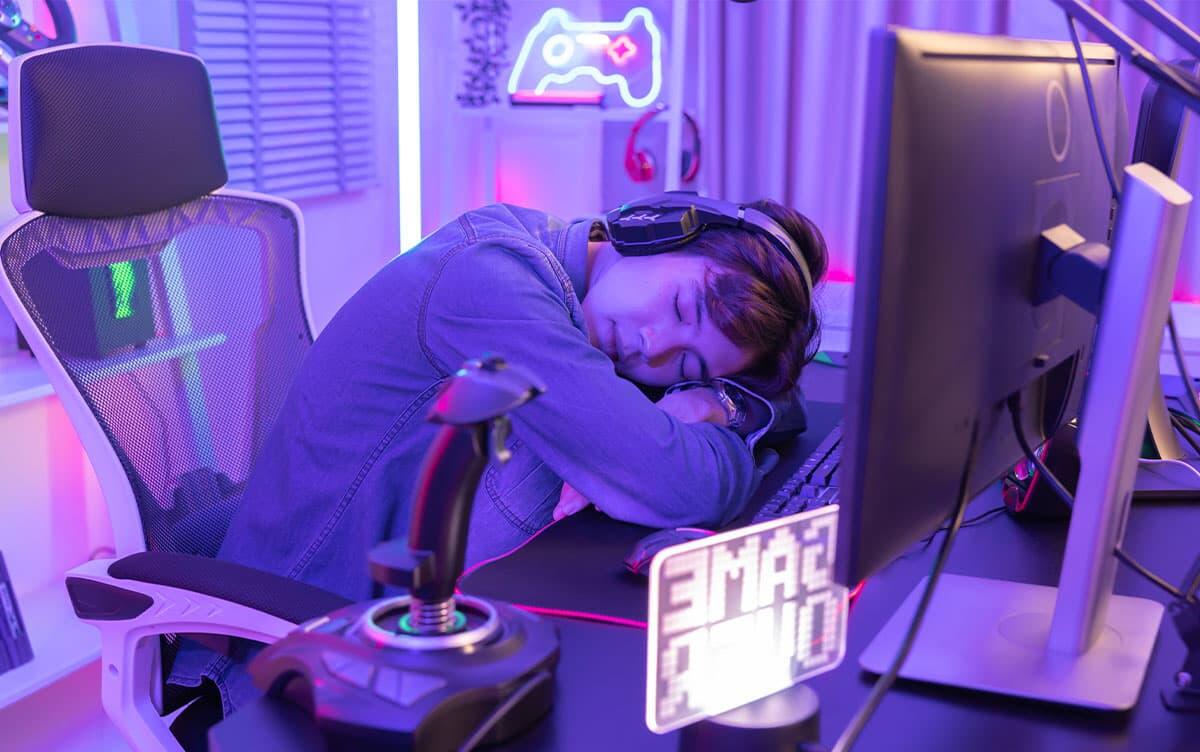 Image by charnsitr/Shutterstock
A research team at University of Tsukuba reported that 43.3% of Japanese esports players were classified as having poor subjective sleep quality, according to a cross-sectional survey. In particular, poor sleep quality was common among individuals who engaged in esports play between 3:00 a.m. and 8:59 a.m. The study also identified differences in sleep patterns according to competitive level: professional players were more likely to have later bedtimes and wake-up times, and amateur players tended to report a shorter total sleep time. These findings underscore the importance of supporting sleep health in esports, including avoiding early-morning play if possible.
Tsukuba, Japan—Esports is a competitive activity that requires advanced cognitive functions and sustained concentration, making high-quality sleep essential for consistent performance. At the same time, esports players often train and compete late at night or overnight, raising concerns about irregular or insufficient sleep. Despite these concerns, only few studies have comprehensively examined the prevalence of poor subjective sleep quality among esports players, the differences between professional and amateur players, and the correlation of sleep with esports activity patterns.
This study conducted a web-based survey of 90 esports players in Japan (mean age: 22.4 years), recruited from one professional team and five amateur teams. Subjective sleep quality was assessed using the Pittsburgh Sleep Quality Index (PSQI). Players were classified as having poor subjective sleep quality (a PSQI global score of ≥5.5). Results showed that 43.3% of all participants were classified as having poor subjective sleep quality, with no significant differences in prevalence between professional and amateur players. Nevertheless, evident variations in sleep patterns were observed: professional players generally had later bedtimes and wake-up times, and amateur players were more likely to have a shorter total sleep time. In addition, playing esports during the early-morning hours, particularly between 3:00 a.m. and 8:59 a.m., was associated with poor subjective sleep quality.
These findings emphasize the substantial burden of sleep issues among esports players and indicate the need for sleep-health support tailored to players' competitive status and life circumstances. The results also suggest that sleep health should be incorporated into team- and organization-level health management, including sleep-hygiene education, awareness campaigns promoting healthier play schedules, and targeted messaging to prevent early-morning play if possible.
###
This study was partially supported by joint research grants from REJECT Inc., NTT EAST Corp., and Meiji Co., Ltd.
Original Paper
- Title of original paper:
- Prevalence and factors associated with poor subjective sleep quality among electronic sports players: A cross-sectional study
- Journal:
- Sage Open
- DOI:
- 10.1177/21582440261420180
Correspondence
Associate Professor MATSUI Takashi
Associate Professor MONMA Takafumi
Institute of Health and Sport Sciences, University of Tsukuba
President KOYAMA Shoya
REJECT Inc.
Related Link
Institute of Health and Sport Sciences
