


Research News
Climate Change Is Reshaping Northern Eurasia's Carbon Sink
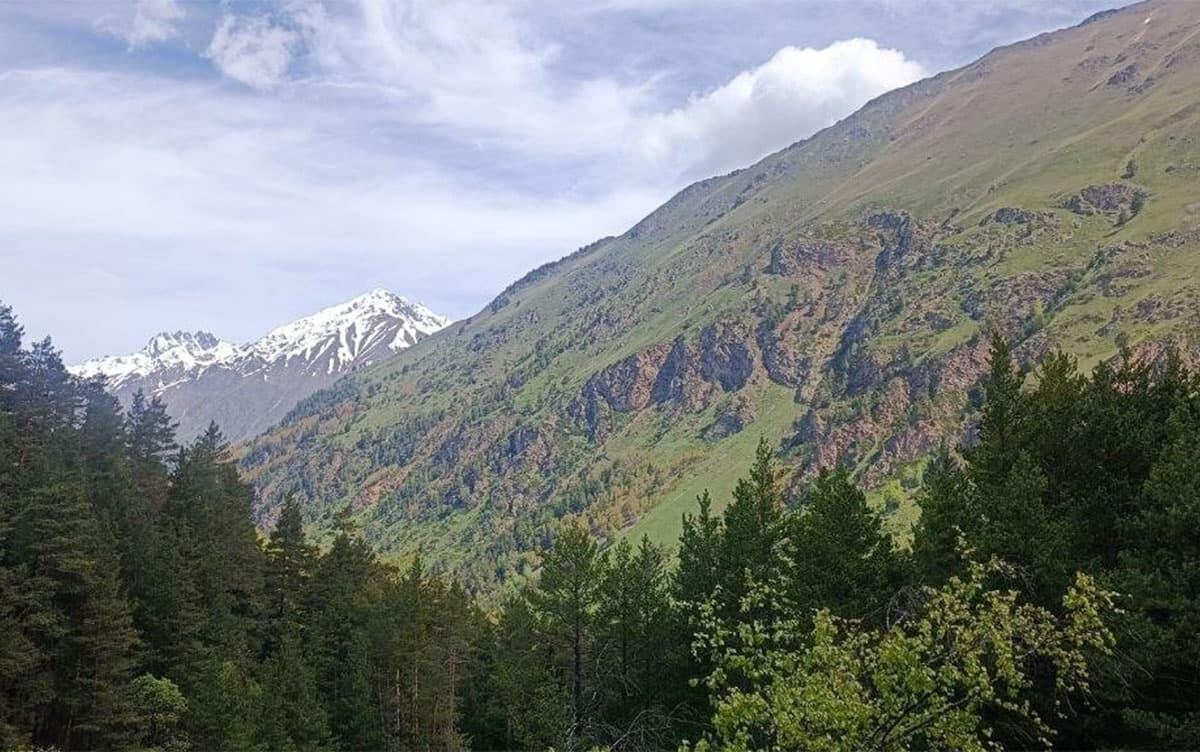 Image by Andrey Kurochkin
A new study analyzed data from multiple independent sources, ranging from satellite remote sensing-based machine learning products to state-of-the-art Earth System Models, to reveal how climate change shapes the Northern Eurasian carbon sink. The study confirms that Northern Eurasia accounts for nearly one-third of the global terrestrial carbon sink. It also shows that, despite warming faster than most regions worldwide, the northern high latitudes contribute little to strengthening the Northern Eurasian carbon sink because of their low baseline carbon uptake.
Tsukuba, Japan—Northern Eurasia contains about 20% of the world's forests and plays a crucial role in mitigating climate change by absorbing atmospheric carbon dioxide, thereby acting as a major carbon sink. However, understanding the region's carbon sink is challenging because it is influenced by multiple interacting factors, including rapid climate change, wildfires, land-use change, and limited observational coverage across its vast extent.
A new study integrated evidence from multiple independent sources, including satellite observations, data-driven products, atmospheric inversion models, dynamic global vegetation models, and Earth System Models, to investigate how climate and climate change shape the Northern Eurasian carbon sink. Despite substantial differences among the data sources, the study found broad agreement that Northern Eurasian ecosystems absorb approximately 0.47 ± 0.20 billion tonnes of carbon annually, accounting for nearly one-third of the global terrestrial carbon sink.
It is often assumed that faster warming strengthens carbon sinks in colder regions. However, the study shows that the strongest carbon sinks occur in the western and southern parts of Northern Eurasia, whereas carbon sinks progressively weaken toward the colder northeastern regions. Although these vast cold regions are experiencing some of the fastest warming on Earth, their forests are generally less productive and more susceptible to disturbances such as wildfires. Moreover, much of the warming occurs during winter, when frozen soils limit carbon uptake. Consequently, these regions contribute relatively little to strengthening the Northern Eurasian carbon sink. The study suggests that differences in forest productivity, often described as "site quality" or "bonitet," help explain this pattern. More productive forests with larger carbon stocks contribute disproportionately to the regional carbon sink, whereas less productive forests show only limited enhancement despite rapid warming. The findings highlight that forest productivity, rather than warming alone, is a key determinant of how the Northern Eurasian carbon sink may evolve under continued climate warming.
###
This work was supported by the Program for the Advanced Studies of Climate Change Projection (SENTAN, grant number JPMXD0722681344) from the Ministry of Education, Culture, Sports, Science and Technology of Japan, by KAKENHI (JP24K20979) of the Japan Society for the Promotion of Science; and by European Union's Horizon Europe research and innovation programme (EYE-CLIMA, grant no. 101081395).
Original Paper
- Title of original paper:
- Land Carbon Sink Distribution in Northern Eurasia is Driven by Climate Change
- Journal:
- Global Biogeochemical Cycles
- DOI:
- 10.1029/2025GB008971
Correspondence
Assistant Professor MELNIKOVA Irina
Institute of Life and Environmental Sciences, the University of Tsukuba
Principal Researcher YOKOHATA Tokuta
Earth System Division, National Institute for Environmental Studies
Related Link
Institute of Life and Environmental Sciences

