


Research News
Rare C-to-G Mutations Occurred at an Unexpectedly High Frequency During the Emergence of the SARS-CoV-2 Delta Variant
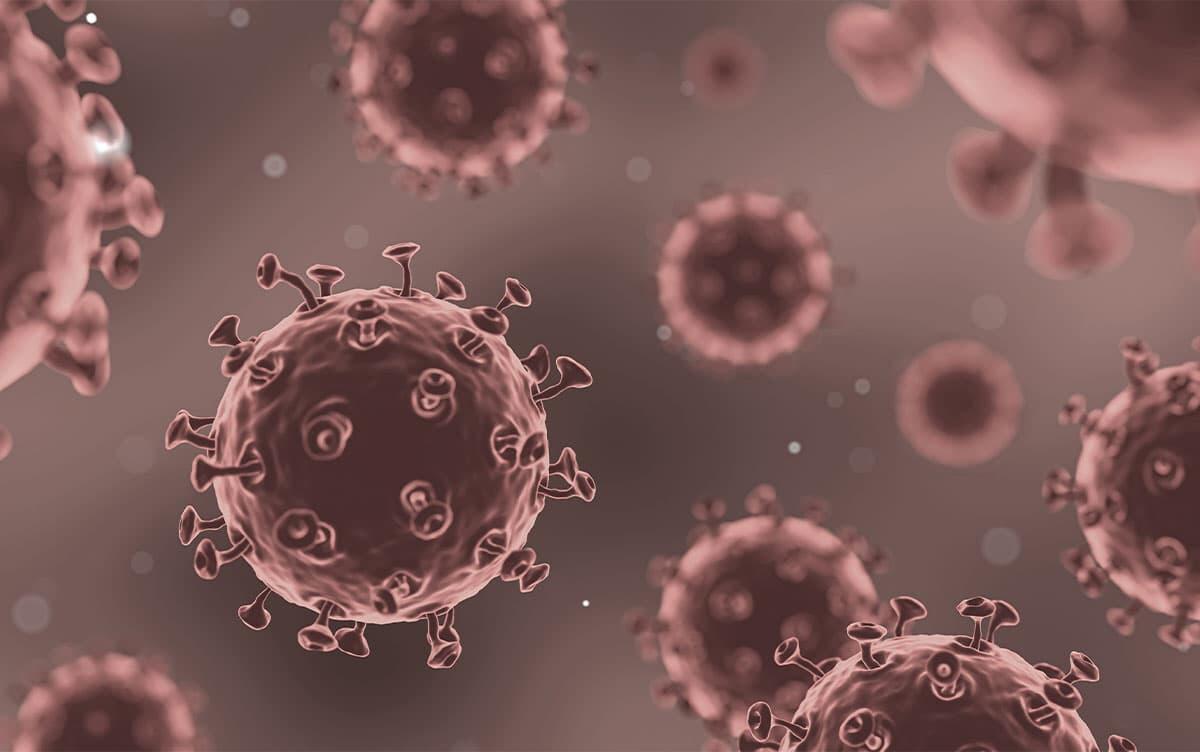 Image by Puwadol Jaturawutthichai/Shutterstock
A researcher at University of Tsukuba analyzed mutation patterns in the spike protein of the SARS-CoV-2 Delta variant. Two of the seven amino acid substitutions that emerged with the Delta variant resulted from cytosine-to-guanine (C-to-G) nucleotide substitutions, a mutation type that is among the rarest observed during SARS-CoV-2 evolution. A comparison with other major variants and within-lineage viral evolution revealed that the frequency was significantly higher than expected, indicating an unusual mutational pattern in the Delta spike protein. These findings offer new insight into the evolutionary processes associated with the emergence of highly transmissible SARS-CoV-2 variants.
Tsukuba, Japan—SARS-CoV-2 possesses a characteristic surface protein, the spike protein, which plays a central role in viral entry into host cells. The evolution of spike protein mutations has been an important factor in the emergence of viral variants with altered transmissibility and immune-evasion properties. Previous studies have shown that SARS-CoV-2 evolution is strongly biased toward certain types of nucleotide substitutions, with C-to-G substitutions occurring only rarely.
In this study, the researcher focused on the Delta variant, of which caused a major global outbreak in 2021. The Delta variant's spike protein had acquired seven amino acid substitutions in addition to the D614G substitution common to most major SARS-CoV-2 variants. Notably, two of these seven substitutions—T19R and P681R—arose from C-to-G nucleotide substitutions. Analysis of SARS-CoV-2 genome sequences deposited in the NCBI GenBank and GISAID public databases revealed that C-to-G substitutions are generally rare throughout SARS-CoV-2 evolution. For example, among 865 spike protein mutations identified during the within-lineage diversification of the Alpha variant, only one resulted from a C-to-G substitution. Statistical analyses demonstrated that the proportion of C-to-G substitutions in the spike protein of the Delta variant (2 of 7 substitutions) was significantly higher than the proportions observed during other inter-lineage transitions or within-lineage evolution. These findings indicate that the Delta variant spike protein was unusually enriched for a mutation type that is otherwise strongly suppressed during SARS-CoV-2 evolution. This finding may offer new insights into the evolutionary processes associated with the emergence of highly transmissible variants.
###
This research was funded by the Transdisciplinary Review Association, Japan.
Original Paper
- Title of original paper:
- Unusual Enrichment of Rare C-to-G Transversions in the SARS-CoV-2 Delta Spike
- Journal:
- Infection, Genetics and Evolution
- DOI:
- 10.1016/j.meegid.2026.105989
Correspondence
Associate Professor KAKEYA Hideki
Institute of Systems and Information Engineering, University of Tsukuba
Related Link
Institute of Systems and Information Engineering


