


Research News
Site-Specific Quantification of Riverine and Direct-Release Contributions to Marine Radiocesium Following the Fukushima Daiichi Nuclear Power Station Accident
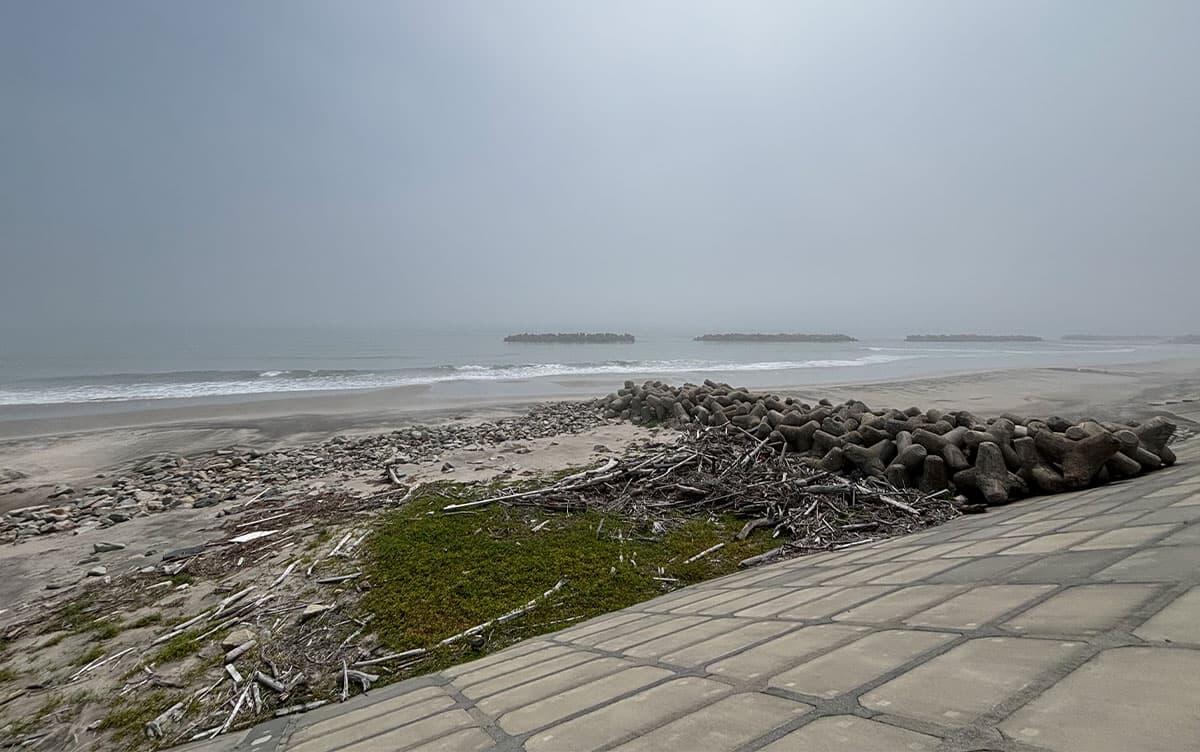
Following the Fukushima Daiichi Nuclear Power Station accident, radiocesium concentrations in the coastal waters of the Fukushima and Miyagi Prefectures have remained above preaccident levels. These elevated concentrations are sustained by multiple sources including ongoing direct releases from the vicinity of the power station and inputs from surrounding rivers. Researchers at University of Tsukuba have succeeded in quantitatively estimating the contribution of each source to radiocesium concentrations at individual coastal locations
Tsukuba, Japan—Cesium-137 (137Cs) is one of the principal radionuclides released into the environment following the March 2011 accident at Tokyo Electric Power Company's Fukushima Daiichi Nuclear Power Station. Owing to its long physical half-life of 30.2 years, 137Cs continues to enter the ocean not only through direct releases from the vicinity of the power station but also through riverine discharge from surrounding catchments. As a result, 137Cs concentrations in nearby coastal waters remain up to several tens of times higher than preaccident levels. Although these concentrations are well below Japan's regulatory standard for 137Cs in seafood (100 Bq/kg), understanding the relative importance of each source is essential for developing effective environmental management and monitoring strategies.
In this study, researchers at the University of Tsukuba estimated the contributions of individual sources to marine 137Cs concentrations in the coastal waters of Fukushima and Miyagi Prefectures. Based on time-series data, the researchers developed a mathematical model describing the relationship between source pathways and seawater concentrations. The analysis considered three sources: direct releases from the vicinity of the power station, riverine discharge from surrounding catchments, and background 137Cs originating from global fallout before the accident. Based on 137Cs dilution after entering the marine environment, the model was used to estimate source-specific contributions during 2013-2016.
The analysis revealed clear regional differences. Owing to the effects of coastal circulation and other oceanographic processes, the contribution of direct releases was greater at monitoring sites south of the power station. Along the coast of the Fukushima Prefecture, several rivers were in close proximity to the power station, and the relative contributions of individual sources differed substantially among the monitoring sites. Along the coast of the Miyagi Prefecture, geographically adjacent monitoring sites exhibited similar contribution patterns, indicating relatively uniform influence of the sources over the study area.
These findings provide important insights for improving future marine monitoring programs and evaluating measures for reducing 137Cs concentrations in coastal marine environments. The study demonstrates that site-specific source contributions can be estimated directly from time-series data of 137Cs concentrations without explicitly modeling complex ocean transport processes.
###
This work was supported by JSPS KAKENHI Grant Number JP25K01328.
Original Paper
- Title of original paper:
- Estimation of the Contribution Rates of Multiple 137Cs Source Pathways to the Ocean after the Fukushima Daiichi Nuclear Power Station Accident
- Journal:
- Regional Studies in Marine Science
- DOI:
- 10.1016/j.rsma.2026.105272
Correspondence
Professor HATANO Yuko
Institute of Systems and Information Engineering, University of Tsukuba
Professor TSUMUNE Daisuke
Institute of Life and Environmental Sciences, the University of Tsukuba
TAKAHASHI Yuki
Doctoral Program in Risk and Resilience Engineering, Degree Programs in Systems and Information Engineering, Graduate School of Science and Technology, University of Tsukuba
Related Link
Institute of Systems and Information Engineering
Institute of Life and Environmental Sciences

