


Research News
A New Role for Nitrate Reductase in Regulating Nitrogen-Responsive Nodulation
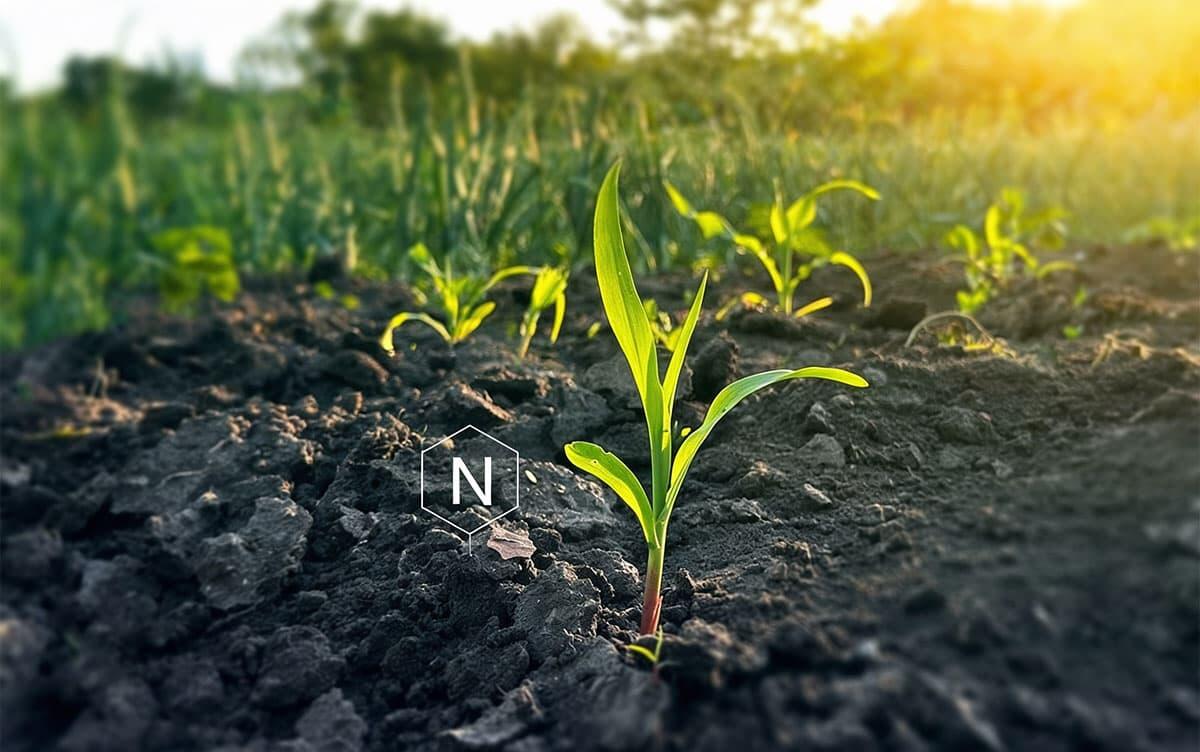 Image by Miha Creative/Shutterstock
In legumes, root nodule formation is suppressed when nitrogen nutrients, such as nitrate, are abundant. Researchers at University of Tsukuba have discovered that, in addition to its known involvement in nitrate assimilation, nitrate reductase also regulates the plant's response to external nitrate by controlling internal nitrate levels, thereby helping to regulate root nodule formation.
Tsukuba, Japan—Certain plants, including legumes, form specialized organs called root nodules on their roots, where they establish symbiotic relationships with nitrogen-fixing bacteria. This root nodule symbiosis enables plants to use atmospheric nitrogen for growth, thereby reducing their dependence on nitrogen fertilizers. The application of this characteristic is highly promising for developing sustainable agricultural systems. Conversely, legumes suppress root nodule formation when sufficient nitrate and other nitrogen nutrients are present in the soil. Biological nitrogen fixation requires substantial amounts of energy. Thus, this response is thought to enable plants to balance the costs and benefits of symbiosis according to nitrogen availability. However, the underlying molecular mechanisms by which plants monitor their internal nitrogen status and regulate nodulation have not been fully elucidated.
In this study, the researchers investigated the function of nitrate reductase (NIA) in the model legume Lotus japonicus. They discovered that NIA serves not only as a key enzyme in nitrogen assimilation, catalyzing the first step of nitrate reduction, but also as an important regulator of nitrate-responsive nodulation by maintaining appropriate internal nitrate levels. Furthermore, the researchers found that loss of NIA function resulted in excessive nitrate accumulation within the plant, strongly suppressing root nodule formation even under low-nitrate conditions that would not affect nodulation. These findings indicate that the plant's internal nitrate status, rather than external nitrate availability alone, is critical for determining nodulation responses.
This study uncovers a previously unrecognized role of NIA in controlling root nodule formation by regulating internal nitrate status, in addition to its well-established role in nitrogen assimilation. These findings offer new insights into the mechanisms regulating root nodule symbiosis and may contribute to the development of sustainable agricultural technologies aimed at optimizing nodulation to reduce reliance on nitrogen fertilizers.
###
This research was supported by MEXT/JSPS KAKENHI grants (JP23K27188, JP25H01345 and JP26K02024) and JST ALCA-Next (JPMJAN23D2).
Original Paper
- Title of original paper:
- Nitrate Reductase Modulates Internal Nitrate Status and Nodulation Responses to Nitrate in Lotus japonicus
- Journal:
- Plant and Cell Physiology
- DOI:
- 10.1093/pcp/pcag108
Correspondence
Professor SUZAKI Takuya
Institute of Life and Environmental Sciences, the University of Tsukuba
Related Link
Institute of Life and Environmental Sciences


