


Research News
First Touch, Faster Play: Study Reveals the Body and Ball Movements Associated with Quicker Soccer Passing
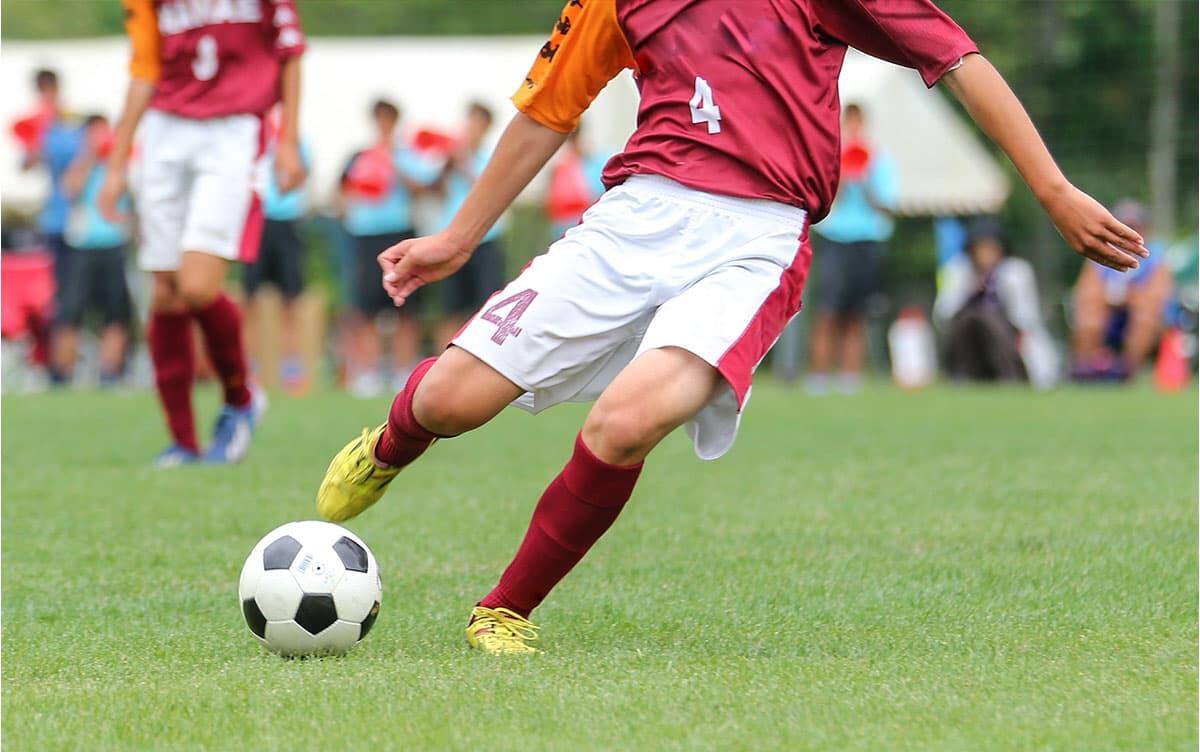 Image by makieni/Shutterstock
Researchers at University of Tsukuba used a three-dimensional (3D) motion capture system to explore the biomechanics of the soccer technique known as the "first touch," the initial contact with the ball after receiving a pass. Their findings provide the first scientific evidence identifying the movement characteristics associated with faster transitions from receiving a pass while running to executing the next pass.
Tsukuba, Japan—In soccer, the quality of the first touch is integral to shaping the subsequent actions of a player. Despite its importance, there is limited scientific evidence regarding which specific movement characteristics are associated with effective first-touch performance.
In this study, university soccer players performed a dynamic receive-to-pass task in which they received a pass while running and then immediately made the next pass. Using a 3D motion capture system, the researchers examined whole-body and ball kinematics and identified the biomechanical factors associated with shorter trap-to-pass times. The results showed that faster receive-to-pass transitions were associated with avoiding an excessively rapid foot approach immediately before ball contact, maintaining a more upright body posture when receiving the ball, and limiting excessive forward or upward rebound of the ball after the first touch.
The findings provide a new biomechanical perspective on the soccer "first touch"—the initial contact with the ball after receiving a pass—and objective evidence of movement characteristics associated with the rapid continuation of play. The study may help translate traditionally experience-based coaching concepts, such as "a good first touch," into measurable movement characteristics, with potential applications in player development, coaching, performance analysis, and future technologies using motion capture and artificial intelligence.
###
This study was conducted without external funding and reflects the collective efforts of all contributors.
Original Paper
- Title of original paper:
- Kinematic factors associated with first-touch control and trap-to-pass transition in football during a dynamic receive-to-pass task
- Journal:
- Football Studies
- DOI:
- 10.1016/j.footst.2026.100071
Correspondence
Professor NAKAYAMA Masao
Institute of Health and Sport Sciences, University of Tsukuba
Richong Liu
Doctoral Program in Coaching Science, Graduate School of Comprehensive Human Sciences, University of Tsukuba
Related Link
Institute of Health and Sport Sciences
