


Research News
Life Underground Shifted Load Transmission from the Scapula to the Clavicle in Moles
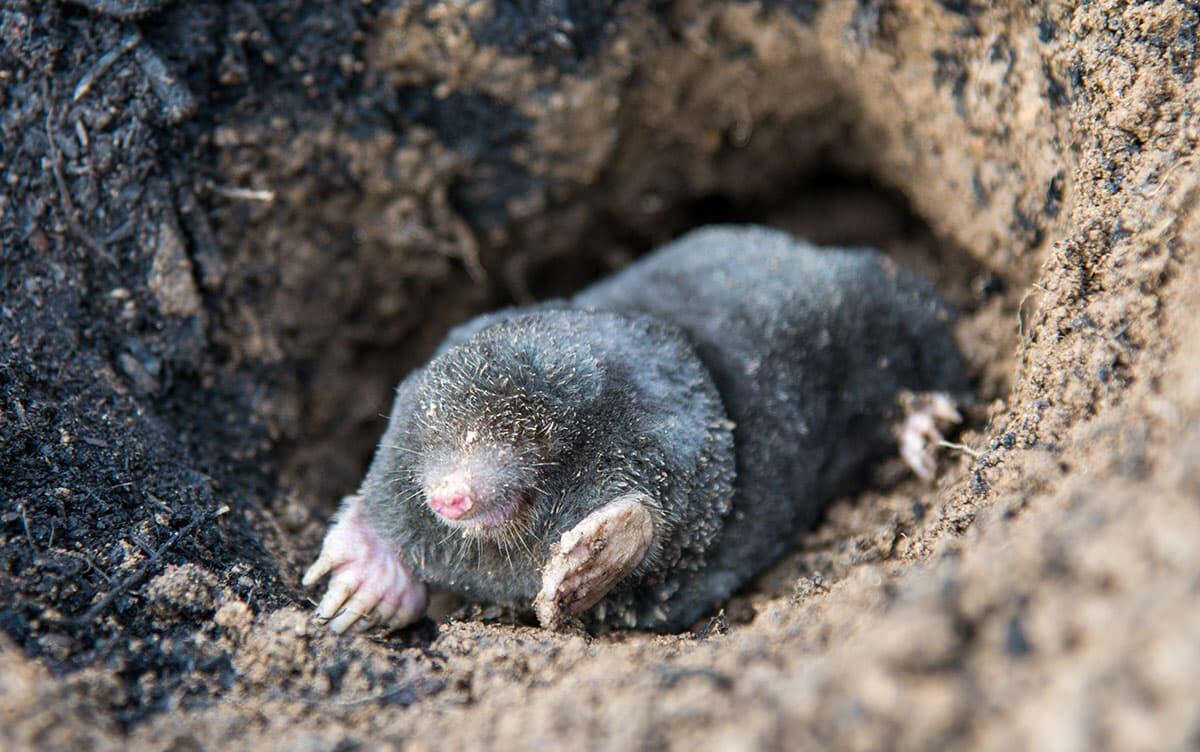 Image by kubais/Shutterstock
The scapula is the primary bone supporting the body in typical quadrupedal mammals. However, in mole species living underground, the clavicle may play a more important role, as shown by an analysis of the internal bone structure led by a researcher at the University of Tsukuba. This analysis suggests that the bones around the shoulder have adapted to the moles' unique posture, which involves holding the forelimbs widely out from the sides of the body.
Tsukuba, Japan—While the scapula is the primary bone supporting the body in terrestrial quadrupedal mammals, internal bone structure analysis in underground moles (family Talpidae) showed a more important role for the clavicle. This study offers the first evidence that the pathways for load transmission within the shoulder girdle—the bones connecting the forelimbs to the body—shifted in response to their unique posture, with the forelimbs held widely out to the sides of the body and the elbows facing upward.
In terrestrial animals, ground forces, such as those experienced when supporting body weight or digging, are transmitted from the forelimbs to the body through the shoulder girdle. In typical quadrupedal mammals, which walk with their forelimbs beneath their bodies, the scapula appears to play the primary role in transmitting those forces to the body. In contrast, underground moles have adapted to a fossorial lifestyle, adopting a posture in which their forelimbs are held widely out from the sides of their bodies. This posture might transmit forces to the shoulder girdle differently than in typical mammals.
In this study, the researcher examined the internal structures of the mole's clavicle and scapula and compared them with those of the Asian house shrew (Suncus murinus), a closely related species that walks with its forelimbs beneath its body. The results showed that, while the clavicle and scapula were more developed in moles than in Asian house shrews, the clavicle exhibited stronger internal structural features, which were not observed in the scapula. Conversely, the shrew's internal structure was more robust in the scapula and less so in the clavicle.
These findings suggest that the evolution of the mole's unique posture was accompanied by a reorganization of load-transmission pathways within the shoulder girdle. This analytical approach of comparing internal bone structure may help future research reconstruct how the morphology and functional roles of individual skeletal elements in the shoulder girdle have changed throughout vertebrate evolution.
###
This study was supported by the Japan Society for the Promotion of Science (JSPS) fellowship (grant nos.: JP21J14927 and JP26KJ0038).
Original Paper
- Title of original paper:
- Bone histological evidence for posture-related load transmission in the talpid pectoral girdle
- Journal:
- Journal of Anatomy
- DOI:
- 10.1111/joa.70222
Correspondence
Researcher NAKAI Daichi
Institute of Life and Environmental Sciences, University of Tsukuba
Related Link
Institute of Life and Environmental Sciences

