


Research News
Open-Source Software Standardizes Tau PET Image Analysis for Neurodegenerative Disease Research
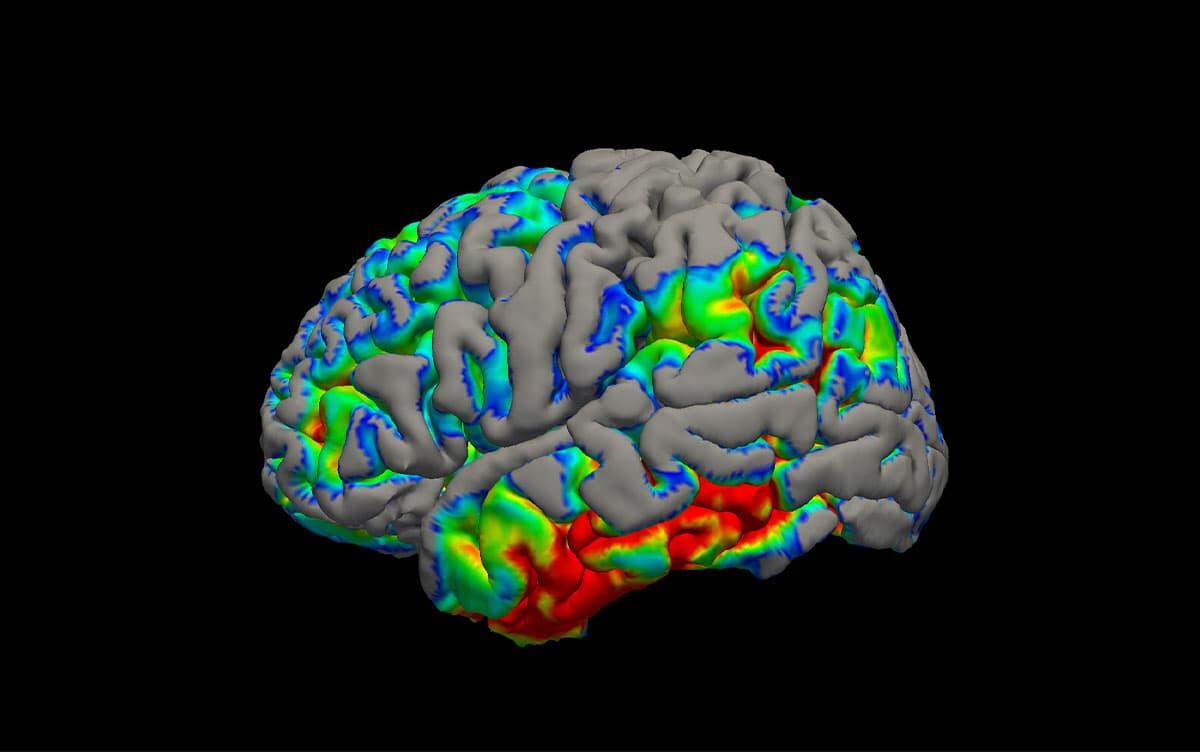 This image is for illustrative purposes only and does not show actual patients or research participants.
Researchers at University of Tsukuba have developed and released Tomographic Image Preprocessing Using Automated Multi-Reference Estimation for Quantification (TAME-Q), an open-source software package that automatically processes florzolotau (18F) positron emission tomography (PET) images to assess abnormal tau protein accumulation in the brain, a hallmark of several neurodegenerative disorders, including Alzheimer's disease. The software streamlines PET image analysis and provides researchers with a standardized framework for reproducible data processing and evaluation.
Tsukuba, Japan—In neurodegenerative disorders, including Alzheimer's disease and progressive supranuclear palsy, abnormal accumulation of tau protein occurs in the brain. Identifying the location and extent of tau accumulation in vivo is crucial for understanding disease mechanisms and progression. PET imaging with florzolotau (18F), a radiotracer that binds to tau aggregates, can visualize tau pathology. The cerebellum is often used as a reference region; however, abnormal tau accumulation also affects the cerebellum in some non-Alzheimer's tauopathies. Therefore, previous studies have proposed estimating reference values from PET signal intensity distribution in gray matter. However, image analysis typically relies on laboratory-specific programs or commercial software, thereby hindering analytical reproducibility and cross-study comparisons.
In this study, the researchers developed and released TAME-Q, software that implements an established semi-quantitative analysis method. It automatically processes PET and structural MRI data, estimates reference values, generates standardized uptake value ratio (SUVR) images, and calculates regional SUVRs as semi-quantitative measures of tracer uptake.
The software was evaluated using imaging data from 133 participants: 37 individuals on the Alzheimer's disease continuum, 46 patients with progressive supranuclear palsy—Richardson syndrome, and 50 healthy controls. The automated pipeline successfully processed all datasets, and its measurements were consistent with findings from previous studies of Alzheimer's disease and progressive supranuclear palsy. Additionally, machine learning—derived tau scores calculated from regional SUVRs obtained using TAME-Q correlated with benchmark scores reported in the previous study.
Along with the release of the TAME-Q , the researchers made its execution environment publicly available, allowing analyses to be conducted under the same computational conditions. By reducing the burden of software installation and configuration and providing a transparent, standardized workflow, TAME-Q is expected to support reproducible tau PET research and facilitate future studies of neurodegenerative diseases.
###
This work was funded in part by Japan Society for the Promotion of Science, KAKENHI, under Grant Number 25K15384; by AMED under Grant Numbers JP21dk0207055, JP23wm0625001, and JP24wm0625505; and JST under Grant Numbers JPMJCR1652, JPMJMS2024, and JPMJSP2124.
Original Paper
- Title of original paper:
- TAME-Q: An Open-Source Preprocessing Pipeline for Reproducible Semi-Quantification of Florzolotau (18F) PET
- Journal:
- BMC Medical Imaging
- DOI:
- 10.1186/s12880-026-02775-5
Correspondence
Professor ARAI Tetsuaki
Institute of Medicine, University of Tsukuba
NAKAYAMA Kenjiro
Doctoral Program in Medical Sciences, Graduate School of Comprehensive Human Sciences, University of Tsukuba
Director HIGUCHI Makoto
Advanced Neuroimaging Center, Institute for Quantum Medical Science, National Institutes for Quantum Science and Technology
Related Link
