


Research News
Anyone Can Dock: Molecular Docking for Anyone, Anywhere, Anytime
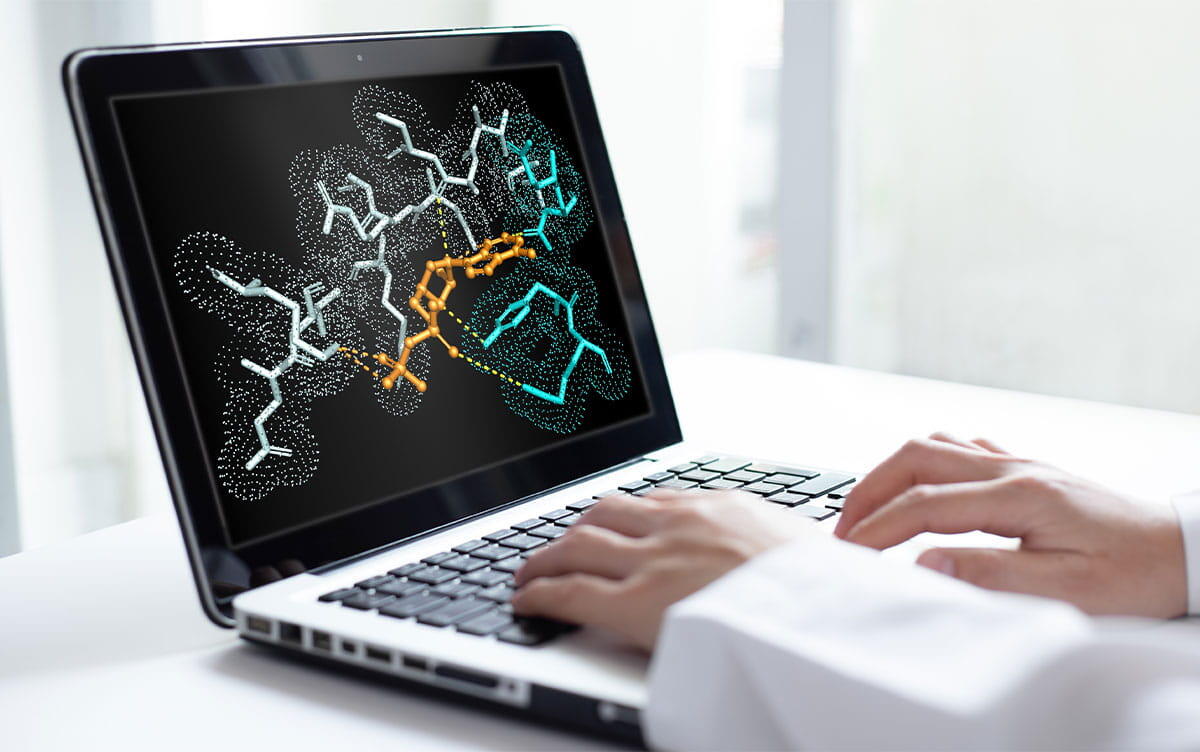 Image by S. Singha/Shutterstock
"Anyone Can Dock" is a molecular docking platform that lets everyone start protein-ligand docking in the best way possible. Students and experimental researchers can use the simple web interface on a smartphone, tablet, or computer for quick docking and rapid hypothesis testing. Researchers can use Google Colab to screen more compounds or compare different docking methods for batch calculations and multiple docking engines. Advanced users can run the workflow locally or through command-line tools. Further, ChatGPT and Claude via MCP can act as AI docking partners, helping users to run docking workflows, ask questions, and understand the results in natural language. The platform, developed by researchers at the Center for Computational Sciences, University of Tsukuba, in collaboration with Mahidol University, makes molecular docking easier to access, understand, and integrate into experimental research.
Tsukuba, Japan— Molecular docking is widely used to explore how small molecules bind to protein targets. For many experimental researchers, the practical barrier is the software, not the scientific question. Conventional workflows often require program installation, command-line operation, manual receptor and ligand preparation, protonation-state assignment, file conversion, and result processing. These requirements can create barriers to adopting docking, particularly for researchers in medicinal chemistry, cell-based assays, pharmacology, natural products, and other experimental fields.
"Anyone Can Dock" was developed to make molecular docking easier to start, scale, and understand. The web interface supports quick docking and rapid hypothesis testing on a smartphone, tablet, or computer by guiding users from protein and ligand input to docking results, 3D poses, 2D interaction diagrams, and RMSD-based validation. Behind the interface, the platform automates important preparation steps, including metal-preserving receptor preparation, pH-aware ligand preparation, and bond-order correction of docked structures.
For studies beyond a few compounds, the Google Colab implementation supports batch docking with multiple docking engines, including AutoDock Vina, VinaXB, GNINA, and Vina-GPU. This enables virtual screening, comparison of docking methods, and flexible control of computational parameters without requiring users to build a complete local environment from scratch. The workflow also runs locally for users seeking greater control or reproducibility.
"Anyone Can Dock" goes beyond docking calculations by helping users interpret their results through interactive structural visualization and interaction analysis. AI-assisted interfaces further support natural-language guidance and explanations of docking scores, binding interactions, RMSD values, and predicted poses. These interfaces offer workflows ranging from quick docking experiments to larger screening and AI-assisted interpretation, making molecular docking more accessible and practical for research, education, and scientific exploration.
Please visit this tool using the following link: https://nyelidl.github.io/anyone-docking/.
###
This research funding was provided by JSPS KAKENHI (21H05269, 24K20888, 23H04879, 23H02427), Toyota Riken Scholar Phase 1, Mahidol University/NSRF (FF-077/2568), JST CREST (JPMJCR20B3), and QiLS, University of Tsukuba. Computational resources were supported by MCRP at CCS, University of Tsukuba.
Original Paper
- Title of original paper:
- Anyone Can Dock: an online molecular docking tool for everyone
- Journal:
- Journal of Cheminformatics
- DOI:
- 10.1186/s13321-026-01306-2
Correspondence
Assistant Professor HENGPHASATPORN Kowit
Center for Computational Sciences, University of Tsukuba
Related Link
Center for Computational Sciences
GitHub: https://github.com/nyelidl/anyone-docking
Web-based molecular docking: https://nyelidl.github.io/anyone-docking/