


TSUKUBA FRONTIER
#052 Scent as an Important Tool for Communication: Exploring the Memories and Emotions Evoked by Smell
Professor AYABE-Kanamura Saho, Institute of Human Science

Unlike the products of vision and hearing, it is difficult to verbalize or quantify smells. However, we are surrounded by many intriguing odors, and it is not uncommon for a sudden whiff of a scent to bring back vivid memories from the past. Drawing on perceptual psychology, this study explores how we perceive odors and the way that they are connected to our daily lives and emotions.
Is the Sense of Smell a Primitive Sense?
People exposed to the same odor perceive it differently. A particular smell could remind someone of a childhood event, and a pet's odor, which can be considered unpleasant, could be comforting to its owner. Some are less sensitive to odors than others, and even for the same individual, perception of a smell can change with repeated exposure.
For a long time, the sense of smell was thought to be a primitive sense and therefore closely linked to emotional neural circuits. However, recent research has indicated that olfactory perception is not only shaped by these emotional connections but also by learning, as we continuously compare new odors with past memories and experiences. The ability of perfumers and sommeliers to identify subtle differences in odors and describe them precisely is not innate but a skill that is acquired through extensive training.
This involves encountering a wide variety of odors and developing one's own way of remembering them by associating odors with experiences and emotions. This is precisely why there are such pronounced individual differences in olfaction. While this variability poses challenges for research, it also makes experimental design particularly engaging.
Experiments in Perceptual Psychology
The study of the sense of smell spans a broad range of topics. Human olfaction functions in close interaction with other sensory information, including vision, as well as past experiences and memories. For this reason, experiments that involve human participants are essential for the understanding of the underlying mechanisms.
Because odors readily evoke memories and emotions and are perceived differently by each individual, these variations themselves become important subjects of investigation. Therefore, our experiments focus not only on individual differences in olfactory sensitivity but also on how odors are perceived across contexts—such as, for example, changes in olfactory perception depending on mood, behavioral changes induced by emotions evoked by odors, and the associations between odors and visual imagery.
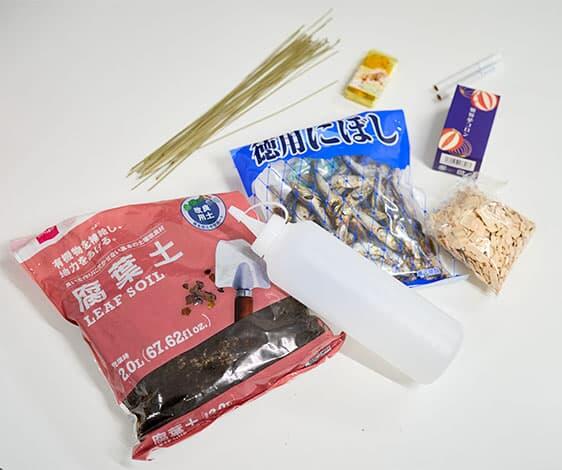
Among the major challenges is that there is no such thing as a standard odor. At the same time, using unfamiliar or obscure odors that participants have never encountered is impractical. Instead, Professor AYABE-Kanamura selects odors from everyday life—ranging from food and flowers to tobacco, rush grass, ink, and crayons depending on the aims of the given experiment. Analyzing participants' responses, she investigates how various experiences, memories, and emotions are connected to the sense of smell.
Communication Facilitated by Smell
The sense of smell begins to develop during the fetal stage and is influenced by the mother's diet and the living environment. Because olfaction plays an essential role in recognizing the surrounding environment after birth and in sharing experiences through human interaction, Professor AYABE-Kanamura also studies children's sense of smell and odor-mediated communication.
Communication that is triggered by odor could contribute to the development of language and conversational skills. In one study, Professor AYABE-Kanamura conducted a game in which parents and children, siblings, and friends sought to identify each other's scents. Mother-daughter pairs performed particularly well. These results indicate that shared experiences are closely linked to verbal expression, and differences arise that relate to gender and the nature of interpersonal relationships.
Drawing on these findings, Professor AYABE-Kanamura is currently exploring means of applying odor-based interactions to the educational programs designed to promote experience sharing and improve communication skills.
Exploring the Social Role of Smell
My research journey began when I chose smell for the topic of my undergraduate graduation project—it had rarely been addressed in perceptual psychology at the time. While my academic advisors had warned me that it would be difficult for them to supervise such a project, I became involved in research on odor prevention at the Product Science Research Institute (now the National Institute of Advanced Industrial Science and Technology); this marked my entry into full-scale olfactory research.
While more researchers have come to study olfaction in fields such as physiology and medicine, they remain relatively small in psychology. However, this rarity likewise represents a unique strength. While smell is a deeply personal sense, it also has a social dimension, as people interact with objects, environments, and each other in everyday life.
In this regard, the coronavirus disease of 2019 pandemic—during which interpersonal contact was drastically reduced—poses an important question. Beyond the olfactory dysfunction that was widely reported as a symptom of infection, it is possible that people's broader relationship to smell could also have changed. This is a complex issue requiring long-term, cross-generational observation, but it is a theme that I hope to pursue in future research.
Profile

Drawing on domestic and international research experience, including industry-university collaboration, she conducts psychological research on olfactory perception, memory, emotion, individual differences, and communication. Her work explores the human mind through the sense of smell, with a particular focus on the verbalization of odors, perceptual changes through experience, and the sharing of sensory experiences.
(URL:https://www.human.tsukuba.ac.jp/~sahoaya/index.html)
Article by Science Communicator at the Bureau of Public Relations
TSUKUBA FRONTIER (PDF for printing)